Tag: short story

  • Te Iubesc

    Te Iubesc

    (Originally published on Medium on December 31st, 2024)

    Thrice you’ve texted in the years since you’ve passed, the same curt message:

    E mama. Sunt o pisica de piatră. Te rog, vino la Cimitirul Eternitatea în următoarea luna albastră. Te iubesc.

    Always during blue moons. Always from random Romanian numbers.

    And, quite frankly, ma, I’m a little pissed.

    Alive, you had no time for me. Just flew your little Starla off to “un loc mai bun…” As if any place without you was better than being with you. But dead, well… Now you want me back. Won’t even tell me why (or how you’re doing this!). Not plainly, at least.

    But Iași isn’t my home, you saw to that. Neither is this culture you’ve denied me.

    I came for you, though. Eventually.

    Cost me two days’ travel on economy planes and rickety trains. Had both my laptop and cell phone stolen by a gang of scraggly, yet surprisingly adept, youngsters—that one girl’s portrayal of “lost and afraid” would have had even Meryl Streep rising to applaud. Now I have no way to translate, am hopelessly confused, more frightened than I should be, and so, so furious.

    You never taught my tongue how to dance like yours; I am speechless in your language.

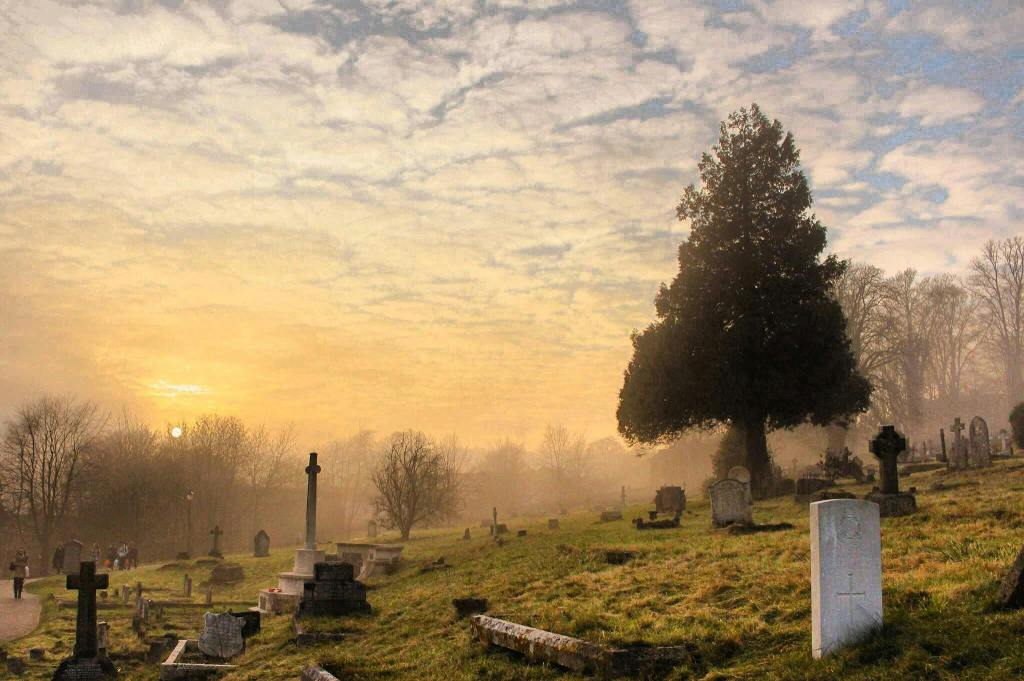
    And as I wander through this crumbly constellation of tombstones dotting “Cimitirul Eternitatea,” the sun setting ablaze the horizon with all the colors of desperation and angst, I’m searching for every cat of stone. Looking for you.

    Happy now, ma?

    Five… six… seven stone cats. I make a mental note.

    Which one are you?

    The sun now set, the moon a faint print in the sky, I sit myself upon a rusted bench along a cobble walkway between graves and puzzle over what to expect. You’re a cat (or so you claim). Of stone. Fitting, I suppose. You never were easy to understand. Ever distant. Enigmatic.

    Will you come alive with the blue moon? Or is this just more wasted time?

    A few plots away, an older woman tends to the cradle grave (presumably) of a loved one. O bătrână. Frumoasă. Swaddled in a black shawl and red headscarf, she lights candles, places them into gilded lanterns hooked on either side of the white marble tombstone. Their small flames illuminate the mass of rose bush spilling out from the grave where it had been planted. Nurtured and grown. Here. She reaches for a white rose, bloomed wide, and caresses its petals. Offers it care and warmth. Acknowledgment. She turns, meets my eyes. Smiles.

    I nod, smile back.

    The blue moon (luna albastră) crowns the distant buildings now, accentuating their brash and distinct brutalist-styling. I remember the letters, the few tales you’ve shared. Of communism and corruption. Of hardship. How, even after the revolution, life wasn’t easy. You did what you thought was best. Gifted me an opportunity at a life you never dared dream for yourself. And I don’t blame you. But that doesn’t mean the missing hurts any less.

    The older woman rises from her tending beside the grave and approaches, small bags clutched and crinkling in hand. She nears, says something I don’t understand, and proffers a bag.

    My throat dries, tenses. Uncertain of what constitutes proper protocol in this situation, all I can think to do is shrug, say, “Uh…”

    “Zi bogdaproste.” She makes light of my ignorance with a soft chuckle, waves her hand in encouragement as she repeats, “Zi bogdaproste, dragă.”

    “Bo–bogdaproste.” The word is clumsy on my tongue, but her brown eyes twinkle.

    I accept the bag she proffered. Seemingly pleased, she nods and departs.

    Stars blink now, and the blue moon glows overhead. I rise from the bench, my eyes already leaping through the cemetery, sweeping across stone cat after stone cat. They’re all where they were, ornamentations scattered amongst various graves. Except one.

    Did I…miscount? I must’ve.

    I cannot move, stilled by thoughts and recollection.

    But… no. No, I didn’t… There were seven cats. But… dammit, ma! You can’t be…

    My legs start to move, aimless at first, wobbly, then with vigor, dashing between tombstones towards where the one cat is missing.

    You’re gonna owe me such an explanation. Can you… even talk as a cat?

    Movement catches my eye. A man in overalls. He’s charging towards me, hollering nonsense, a hoe raised above his head. I lunge behind a nearby tombstone, shout back as he passes, “What the fuck!”

    He pays me no mind, keeps on.

    I shake my head, bite my lip and rise, glaring after him and his maniacal assault. It’s then I spot you—a sleek figure darting just ahead of the man, dark feathers streaming from your mouth like a grotesque trophy. And I don’t know how, but I recognize you instantly. Some inexplicable knowing, deep in my bones.

    He’s got you backed against a thin copse of trees, swinging his hoe. Jabbing.

    You stand your ground. Hiss and shriek. Bristle.

    I come up behind the man, angle myself so he sees me. He shouts something, sounds like profanity, but I wouldn’t know. Flashcards shuffle through my mind. I search for something to say, something he’ll understand.

    “Vă rog!” I start, firm, “Gata.” Enunciating every syllable. “Pisica e bună. Vă rog, pisica e bună.”

    He jabs again and again. Misses you. Misses you.

    Vă rog! I implore. Please.

    He looks at me, shouts back, “Pisica nu-i bună. E agresivă. Sălbatică.”

    From what I understand him say, I agree. You look the part: plumage and bones pouring from your mouth. Jagged. Bloody.

    “A mea,” I insist, stepping past him, towards you. “Vă rog, pisica e a mea.”

    Breeze and breath fill the silence.

    I bend down, scoop you up. You paw at the bag the older woman gave me.

    “Mulțumesc,” I say, backing away through the trees. “Mulțumesc.”

    He waves us off.

    “Plecați de aici! Plecați!”

    I hurry, eager to be rid of him, too.

    It’s true night now. Bright stars wave from their beds of distance and darkness, thousands of small candles wave back, cozy beside their flowers and tombstones, left behind as the stream of straggling visitors trickles out past the iron gate.

    I settle us in the quiet, sit on the steps of a small mausoleum. Look at you.

    “Ai venit, Starla! Ești aici.”

    My heart skips a beat.

    “What?”

    “Nu avem mult timp, draga mea. Ascultă-mă.”

    Gibberish in my ears, I forget to breathe. Just stare at you.

    “No. Nooo. No. You’re a cat. Cats don’t…don’t do that.”

    “Starla. Ascultă-mă. Te rog. Ascultă-mă. E foarte important.”

    I press against my temples, feel my pulse hasten.

    “Ma,” I say, half in disbelief. “Ma, I don’t understand you. I don’t…understand any of this. You’re dead. You’re supposed to be dead. The fuck is going on? How are you alive? A… a cat. How is… any of this happening?

    I cover my eyes. Breathe.

    In all the years that I’ve received these messages from you, I didn’t actually think anything would turn up. It’d just be some sick joke. A misunderstanding. I came here on a whim, not on belief. I came hoping to prove to myself that whatever insanity was transpiring, it was… unprocessed grief manifesting as… something, anything other than this. Because this… can’t be real. Cats don’t talk. Cats don’t talk. THEY DON’T TALK!

    I stumble to my feet, pace along the steps, clap the tips of my fingers together. You follow along beside me lithe and calm and regal as any cat. Somehow that makes everything seem even more impossible.

    “I don’t even…” I exhale. Stop. Look at you. Away. At you again.

    “Concentrează-te, Starla. Concentrează-te,” you say. “Ai telefonul tău?”

    “I. Don’t. Under. Stand,” I say, miming to you. “You’re. Supposed. To be. Dead. Why aren’t you dead?

    You roll your eyes, grumpy-growl at me.

    Your ears shift back and forth, like you’re listening to something.

    “Urmează-mă. Repede.”

    You’re gone, weaving through trees and tombstones. Swallowed by the dead and night.

    “Good God!”

    I hurry after you, more stumbling than running. For a time, I can no longer see you, just keep drifting from candle glow to candle glow. Exasperated and weary. Then I hear you: a guttural shriek followed by what sounds like the howl of a man. I hurtle myself in your direction, prickly bushes and chipped tombstones lash and brush against my arms, my pants, scrapes stinging.

    I come upon a hooded figure curled on the ground. Rocking, whimpering.

    “Ma?” I call out.

    A few rows away, behind a tombstone, you call back, “Aici, Starla. Sunt aici.”

    I press forward in the direction of your voice, confused and hating myself for leaving the injured person behind. What did you do, ma? What did you do?

    A cellphone’s glow illuminates your form in the dark. You’re snarling, pawing at the screen.

    “What are you…”

    “Trebuie să vorbim, Starla. Am nevoie să înțelegi. De ce nu înțelegi?

    “I don’t understand because you weren’t there to teach me! Fuck!”

    I take the phone in my shaking hand, stare at the lock screen. It’s a blur at first, my eyes adjusting to the influx of light, then a young couple. Crisp. Smiling. Bright. The phone slips from my hand — or I let it go. I don’t know. But it lands with a thump on the cobblestone. Cracks. And I teeter to the side, lean against a tombstone. It’s cold and solid and the greatest comfort. I slide down until my butt meets the earth. Just sit there.

    “Starla. Dragă.” You come beside me, nuzzle your nose into my leg.

    I want to brush you off. I don’t. You’re warm and here and alive. And I don’t. But I don’t embrace you either. Just let you be. Be beside me. You’re here…

    “What did you do, ma? Ce ai făcut?”

    A growl is your response. Bristling.

    I look up. Scream.

    A man stands over me. Us. No longer hooded. A deep, clawed-gash marks his left eye. Red pulses and dribbles down his face, splashes against dirtied sneakers and the ground. He yells. Hits me. Shoves me against the tombstone, his grip dizzyingly strong. I can’t think. I let him. I can’t think. I let him. I can’t think.

    You don’t let him. You nip, snarl, and claw.

    He turns, tries to grab you. You nick his hand. He shuffles, goes to kick you. And I don’t know where you land, only hear the thump. The wheezing that follows.

    “Ma,” I say through tight breaths. “Ma.”

    I don’t see when he leaves, just know that he’s gone. Phone, too.

    Once my feet are under me again, I go to find you. Your breath is sharp, soft, and all I can hear. Neither of us says anything as I scoop you into my arms, hold you to my chest.

    “I’m sorry, ma. I’m sorry.”

    What I apologize for, I don’t know. Just seems right.

    You lick my hand.

    All I can think about is getting you someplace safe where I can take care of you. We’ll figure everything else out later.

    We have a later…

    I trudge towards the exit, draw near. You weigh heavier in my arms, fur stiffens, and streaks of grey ripple across you. You’re turning to stone and your shriek stills my heart. Stills me.

    “Nu pot pleca,” your voice is a whisper, cuts deep. It takes all I have not to fall to my knees. “Nu pot. Nu… Nu pot.”

    Not knowing what else to do, the blue moon fading from the sky, I take you back, place you where I first found you. The missing cat. And as stone takes you, you say, “Te iubesc, Starla. Draga mea. Te iubesc.”

    “Te iubesc, ma.” A tremor in my chest. “Te iubesc.”

    I follow the rising sun to leave, pass a still flickering candle and stumble upon that crinkly bag the older woman had given me. Treats fill it, wrapped in packaging with words in your tongue. Some I know. More I don’t. And so, I’ll learn them. One at a time.

    “Until the next blue moon, ma… Ne vedem curând.”
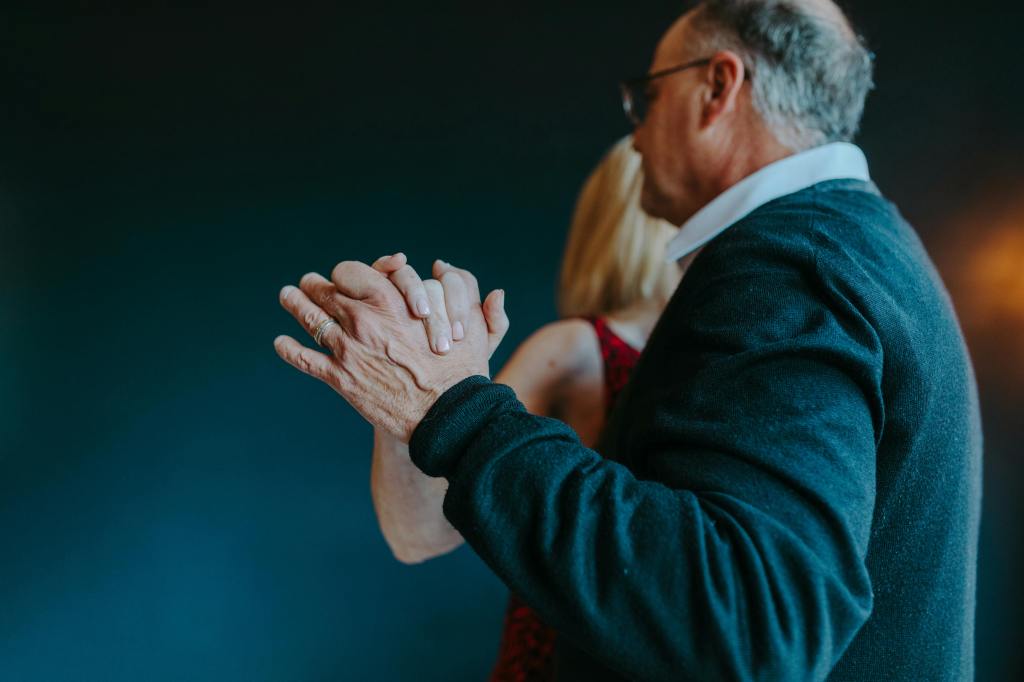
  • The Last Dance

    The Last Dance

    (Originally published on Medium on February 4th, 2025)

    A shiver like a familiar touch spreads across Charles’ shoulder—in the place where she had always touched him. He glances right, and the space beside him on the bed is empty. Still empty. He takes a breath, slow and deep, fills his chest.

    His son says, closing the bedroom door behind him, “Goodnight, father.” He pauses. “I’ll see you in the morning.”

    In the morning.

    He nods to his son. Somehow already knowing.

    Alone, now, in the room they had shared, he sits up—his arms frail and quivering under him.

    He says to the emptiness of the room, “I feel you.” His voice is no more than a rough whisper, weighed with a longing borne of too much time spent on his own. Without her. “I’m here, Rosalynn, dear… I’m here.”

    He scans the room, searching for her. She does not appear.

    Through the patio door a moonlit glow washes over him, suffusing the room, gleaming off the glass of the clock on the wall. The clock he had made for her. Its bells ring, soft and soothing, calling him to a place, to a time he remembers from long ago.

    Charles closes his eyes and basks in the moon-beam light, in the gentle sounding of the bells.

    He opens his eyes. Rapt by the light outside, he moves, slipping slowly off the bed, his withered steps not always steady, not always sure. The crick in his hip flames for a moment, almost as if a reminder of the pain he has willingly, happily endured, biding his time. Waiting.

    For her.

    He opens the patio door and steps out. Steps again. And again.

    And in the span of a breath, he’s at the park. Their park—where they had been young and had first met. The lawn is wet and his feet squish and sink into the muddied grass, but by some sort of miracle he manages not to slip as he hobbles towards the bench. The bench where they had sat, where they had talked, where those first buds of knowing had bloomed between them. He lolls himself down, pressing the curve of his back against the seatback. He huffs for a moment, catching soft breaths, fading breaths.

    The light of the full moon glistens atop the water, painting dazzling white streaks across the rippling black canvas.

    Sitting in the quiet, Charles stares for a moment; he takes in all the sounds of nothing as they play in the background. He is alone here. Alone and waiting.

    Then, as if pouring out from the white streaks of moonlight dancing across the lake, he hears a symphony’s song. It begins as a hum of strings and wind but grows melodically; a rich accompaniment of brass merges with the strings and wind, crescendoing into an orchestral effect so brilliant he cannot help but to stand.

    A pulling sensation tugs at the fabric of the black suit he is now wearing. And, led by the symphonious sounds, he lets himself be lulled toward the lakeshore. He bends over, peering into the water, into that shining bright white. It is not his face he sees. It is hers.

    He does not permit himself to cry, though tears well and swell in his eyes. He will not cry. “It’s all in your head, Charles,” he says to himself. “Yes—Yes, that’s right. All in your head.”

    He closes his eyes, resides in the darkness for the span of a few strung strings. When he opens his eyes again, he sees she’s still there. She says nothing—but her face says it all. Her tells, which he had come to know well during their lifetime together, give everything away. Just as they always had. The quiver at the edges of her eyes. The slight parting of her lips. The faintest tilt of her head to the left.

    Come, her tells seem to say. Come and find meCharlesfind me.

    He does not hesitate. He steps down into the lake; the water parts like curtain veils before him. He expects to feel wet, to be swallowed by the water. But no. No, he’s dry. Dry and walking now across a dance floor. Couples twirl and dance around him, lovers caught in the melody of a song so impossibly beautiful, so impossibly elegant as it suffuses the grand golden ballroom Charles finds himself in. Calming. Until he remembers…

    I must find her. My dear Rosalynn.

    He thinks he sees her. There! She was just there, twirling so close he could have almost reached for her. He does, and his hand falls through the empty air.

    She isn’t there. Not anymore.

    He starts across the dance floor, minding the dancers, minding his steps—each one stronger than the last, sturdier, more confident. Bolder. He passes by a wall adorned with mirrors, all framed in gold, resplendent with rubies and emeralds, glittering in the amorous chandelier light. His reflection changes, though he does not notice. His posture straightens, taller, leaner. The thin white wisps atop his head become richly dark curls, thick and tousled and tumbling just past the edge of his broadened jaw. The milky haze coating his eyes dissipates, replaced by a youthful forest-green gleam as he scours the dance floor; his mind sharper now than it had been moments before, more focused than ever. On Rosalynn.

    Where are you, love? Where?

    This way and that way he wanders; a maze of bodies surround him, all stepping in perfect harmony, in time with the beat of a song so familiar it is nearly on the precipice of his remembering.

    And then, with a spin… she’s there.

    Swaying in an open space on the dance floor, she’s garbed in a gown of tulle and white. Her wedding gown. A wonder, she is, to behold. Here and real and wholly his. At last, my sweet Rosalynn. At last…

    She waits for him, alight in a glow such as only her own beauty could equal. Her brown eyes shine, flecked with amber flames; hers is an enveloping gaze, one which wraps its way around Charles as he nears, piercing into his soul and holding it—holding him—firm and warm and dear in an embrace sewn from all the love and joy and laughter of a lifetime lived happily together. She proffers her cheek. He steps to her, pulls her close with arms strong and with no trace of their former quivering. Charles kisses her cheek, smiling as his wife’s face blossoms sunset red.

    They dance. Slow at first, recalling the placement of hands, the pattern of steps they once knew. With time and new familiarity, their movements find their vigor. A surety shows in the confidence of their steps in time with the beating of their hearts, of the strange, familiar song carrying them across the dance floor. A song Charles remembers now, though he’s never before heard.

    The music slows, as do their steps, and time all but ceases to pass. She leans in, rests her head on his shoulder. He can refrain, now, no longer. Charles cries. He lets the welled-up tears fall. And they fall. And they fall. And they fall. A lake he could fill with his tears, and it would be the sweetest lake. She wipes his tears away, absorbing them as though she was absorbing—absolving—all the pain, all the yearning his soul has had to carry all these long years he has spent without her.

    “Are you ready, Charles?” Rosalynn asks, her voice as warm now as ever it was, softer than petals on water.

    “Ready for what?”

    Her eyes say it all.

    “Yes,” he says, taking a breath that never comes.

    I want to be with you… Light blazes around them.

    To be with you… Music plays, everlasting.

    Be with you… A new dawn rises.

    And he sleeps.

    His son walks in, says, “Good morning, father.”

    A soft melody plays, one he knows, though he’s never heard.

    He cannot hear it. Not yet. But someday. Someday far away.

    “Father?”

  • When One Loves the Fae

    When One Loves the Fae

    (Originally published on Medium on April 9th, 2024)

    Theodore loved faeries, and so I loved him. Not because he loved faeries—obviously, they weren’t real—but because of what loving something meant to him: adventure, devotion, borderline obsession. To the rest of the world, he was a typical college dropout: academically unmotivated, easily distracted. A never-man. Your classic Peter Pan. But he was just Theodore to me.

    And I knew—with dusk on the horizon and the mountains closing in—that by the end of this wilderness excursion to “find the fae,” he would be mine. He would.

    The rain fell over him in pellets, every drop yearning for the chance to shatter itself against his skin. Yet he merely pressed on, determined and seemingly oblivious to nature’s pining.

    I, on the other hand, waded through the underbrush after him, grumbling and shivering like a disgruntled chihuahua. All I wanted was a modest four-star accommodation and a firm lap to rest my head on. I was out of my element, but it felt amazing to have been invited into his.

    “Hey, Theodore,” I shouted into the wind. “How much farther is it?”

    “Shouldn’t be much longer. According to the map, we’re getting close,” he said, rubbing at the spot beneath his pack—his shoulder blade, where his “phantom wings” resided.

    Years ago, he swore that once he found the entrance to the fae realm, he’d get his real wings back. Though, in all the time I’ve known him, sneaking glances at the seaside or in the gym, I’ve noticed nothing more than a few thin scars and an almost crown-shaped birthmark on his left shoulder.

    Sure, he was unconventional—but in a way that made the world feel larger, like it was stuffed with secrets just waiting to be revealed with the tiniest loosening of your grasp on reality.   

    Trudging through the forest, and drenched as I was, I had to admit that there was something ethereal about being out here. I’ve never been one for the outdoors—techno music at the beach with a glass of champagne in hand was as “outdoorsy” as my life usually got. But Theodore had this way with me. He made me want to be a part of whatever next wild adventure he embarked on, even if that adventure meant mud leaking into my shoes and leaves sticking to my hair.

    “Riley, I found it! We’re here.”

    It didn’t seem like we were.

    “Uh, I know I’m not Bear Grylls, but a dark cave to who-knows-where wasn’t exactly what I pictured when you invited me ‘camping.’” I stood eyeing the mountain’s maw, pummeled by the rain. “Shouldn’t there be a campground, or at least a tent somewhere?”

    “Fae don’t live near campgrounds; they find them too noisy and tend to stay away.” The matter-of-fact way those words tumbled from his mouth left me taut-jawed and blinking.

    “Okay… So then, how are we supposed to survive out here—or even stay warm?” More than one solution crossed my mind, even as I watched a fully grown man pad around a cave floor on all fours, searching in every nook and cranny he could find for… something.

    Was he really doing this?

    “I didn’t exactly say camping…”

    “No. But you did tell me to pack an overnight bag—and my mom’s wind chime. What else was I supposed to think?”

    “You brought the wind chime!”

    He beamed at me, his face brighter than all the flashlights in the world. Nerves tangled around my feet—I teetered on my heels and stumbled. There was a kind of glow around him, and for a moment, I almost believed in a realm beyond our own. I wanted to throw my whole being at his smile.

    “You asked me to bring them,” I said with a shrug, trying not to blush. “So, I did.”

    I pulled out the wind chime from my pack and dangled it from my fingers. The evening breeze played a gentle tune in the swaying of its thin metal tubes.

    Theodore jerked to his feet and took off running—dripping water and practically falling—towards me.

    “It’s as beautiful as I remember.” He fished a ratty leather book from his jacket pocket and leafed through its pages. Across and back, he slid his finger along the text until finally he cast a glance at the crooked lips of the cave.

    “There,” he said. “Hang it there in the middle of the cave’s mouth, then glance up and tell me if you can spot the moon through the clouds.”

    I obliged, hooking the wind chime on a rock protruding overhead. When I glanced up, through a web of branches and the thinning clouds, I spotted it. The moon. It was full, casting the mountains in a milky blue hue. I paused to take in its majesty.

    “Well?” His voice was more giddy-child than mountain-man.

    “It’s there. Full and blue…”

    Drops still spilled from the sky, gentler now, seeing as they no longer had a target desirable enough to shatter themselves against. The night was resplendent, a watercolor masterpiece. I even caught a few stars peeking through, curious as I was to see what Theodore would do next. He was my kind of mystery, always keeping me on the margins of certainty—and on my toes.

    “Just as the journal said…” Theodore spoke in a whisper, more to himself than to me. “That means…” He peered into the cave’s depth, glanced back at me, and then tore off into the unknown, shouting over his shoulder, “Come on!”

    With a sigh and an endearing shake of the head, I laid my pack down next to his—nestled in a pool of moss and guarded by a smattering of small blue mushrooms—then took off into the darkness after him, instantly regretting that I had trusted he would pack the flashlight. More than once I thought I might have glimpsed his sinewy silhouette skipping rather than sprinting through the darkness. I didn’t bother suppressing a laugh.

    As I ventured further, the light dwindled, and a chill enveloped me. An eerie murmur brushed my ear—caged whispers, nervous to be set free.

    Tell him how you feel.

    Tell him…

    Don’t you want him to see you?

    See you…

    I did.

    For years I’ve been a friend to Theodore. And not…

    A friend doesn’t sneak quick glances in fleeting moments, unsure if not being found out would be worse than the alternative.

    A friend doesn’t lie about not getting into college just to spend another year lost in some boy’s adventures.

    A friend doesn’t toss and turn at night, wrestling with a thousand what-ifs, wishing they could chase away their own cowardice long enough to say how they really feel.

    I wasn’t his friend because friends don’t want more.

    Sure, Theodore was unconventional, but isn’t nuance what makes life worthwhile?  

    It dawned on me then… I couldn’t see him. I couldn’t see anything.

    “Riley!” Theodore’s voice echoed through the darkness, thrummed in my chest.

    “Theodore?” I began moving in the direction of his voice, my hands outstretched in front of me, feeling for anything. For him. “Theodore, where are you?”

    “Come a little further in. You should see a faint blue light soon. I’m right beside it. Think you can find me?” I heard his grin as he said that last part.

    My response was a secret whispered only to myself: “There’s nothing that could keep me from you.”

    Stumbling through the dark, the eerie voices came again:

    Tell him…

    Your feelings…

    Tell him…

    What was it about caves that played tricks on the mind?

    I could, couldn’t I? Tell him…

    The light was bright as I rounded the corner I hadn’t known was there. Theodore was practically bouncing beside a circle of large blue mushrooms, his eyes alight with intrigue and intensity, like a pirate who’s finally found his golden treasure.

    “This is it,” Theodore said. The mushrooms protruded from small cracks in the cave wall, just about at his chest level—or my eye level. He read from his raggedy journal, bravado ringing in his voice: “When as one the full moon and mushrooms glow, and the night sings its breezy hello, come home to us—your light in the dark; your soul, to us, prepare to depart.”

    “Theodore…” I said, trying to mask the panic bubbling in my stomach. “What’s going on? What are you reading?”

    “I told you I’d find it—the entrance to the realm of the fae. My home.” His wide eyes were as haunting as they were beautiful. “This is it. I finally cracked the journal’s code. And it finally led me here. I spent so long searching for this place. But then I thought of you.”

    You thought of me?

    “Riley, you’re my best friend. I don’t know if you ever really believed me or not, but it didn’t matter because you were always there, right beside me. You could have named me a lunatic and left me to my fantasies. But you didn’t. And I couldn’t leave this realm without letting you know that you have a choice, too. You could come with me, Riley. I’m asking you… Come with me.”

    I didn’t understand the words pouring from his mouth, but the seriousness of his tone unnerved me. If this was magic, it wasn’t like anything I had ever imagined. There was no gust of wind, the glowing mushrooms didn’t burst into stars; nothing changed. Wasn’t magic supposed to change things?

    He said I had a choice… Was that change enough?

    “Theodore.” My voice wavered in my throat. “If I have a choice, then let it be this…”

    His eyes were like blue fireflies, yet I was the one who yearned to be caught.

    “I—I care about you. A lot. Whether you’re a…” I gestured all around. “A faerie, or a pixie, or just Theodore… You make me want to be things I never dreamed I could. You have me out here like some accidental wilderness explorer in a freaking cave in the middle of the woods, probably getting high off the spores of these mushrooms, and yet there isn’t another place in this world I’d rather be.”

    “How about another world?”

    His smirk broke me, and I swooned.

    “So,” he said, sounding at once the cockiest I’ve ever heard him and the happiest. “What are you gonna choose?”

    There was never any choice.  “I want to be with you.”

  • No More Running

    No More Running

    (Originally published on Medium on August 1st, 2024)

    Mom said we weren’t running away—that was a lie. 

    She drove, the car devouring the winding grey river pavement stretching out before us. The surrounding mountains swelled wider and higher as we went, sheltering peaks blanketed by a vast quilt, tattered and aflame with all the colors of early autumn. Narrow patches of green still speckled the crispening landscape, summer leaves unwilling to relent to their fate—resilient, like we were trying to be. 

    I sat in the passenger seat, my fingers laced and rubbing together as if they had minds of their own. The car felt empty with only the two of us. Someone was missing. Someone who should have been there.

    Dad. 

    He was back at home and—though I thought I knew why—I knew I didn’t understand. My tongue grew heavy, straining under the weight of the questions gathering at its tip, each one daring me to let them all spill out, to fill the emptiness that I so desperately wanted not to be there. I bit them back. I locked them away as best as I could. Yet somehow one question slipped through.

    “Why… didn’t you let dad come with us?” 

    Tension flashed across Mom’s face and Rage appeared atop her shoulders—a pulsating behemoth, red and thickening still as it fed upon her wrath, unabashed and with gluttonous abandon. Vile and fat, it weighed on her. From the quiver of her bottom lip and the puffy sternness in her eyes, I could see her resisting Rage’s call to slip into a bludgeoning, verbal offensive. 

    Suffice to say, I had hit a tender spot. I hadn’t meant to.

    He didn’t want to come,” Mom snapped. A small bit of Rage bubbled over, causing her to swerve the car, startling me from watching the black shadows racing through the trees. “Apparently, he felt like he had more important things to spend his time on, people who were more important to him than his own family… The rat-faced bastard.” 

    Tears glistened in Mom’s eyes as the car sped on. I held back my own, just nodding. Keeping silent. I learned a while back that talking when Mom was like this doesn’t do either of us any good. Rage would simply coax her into twisting my words, contort them into something that would better fit within the narrative Rage wove around her. Its whispers were a slow rumbling wind right before the storm. And Mom, by all accounts, seemed sometimes to enjoy the pummeling rains. 

    My eyes leapt from tree to tree, chasing the shadows chasing me. In the glass of the passenger window, I caught a glimpse of Mom’s reflection. Her face reminded me of a deer caught in its own headlights; Rage really did enjoy crashing into her. I could see it in the whitening of her knuckles, in the flaring of her nostrils. Rage was tempting her now, steering toward her. It made her relive the wars, remember how the bombs would fall between her and dad. Remember how they would fling them at each. All through the hollow of the house, the explosions of screams and shouts would ricochet—through the hollow of me. Mom had nearly given into the crash. 

    I found solace sometimes when I remembered that I wasn’t my mom, nor my dad. There were no bombs in me. But there were fears. And dams. Dams I had built to hold back the tears from falling. Sometimes they worked a little too well. 

    As the car finally began to slow, I noticed the worn wooden sign that marked our destination. This was new. We’ve never camped here before. 

    Mom pulled off the grey river road and started through the campground. Patches of weeds, slumbering and brittle, lined the cracked edges of the dirt like ripped and worn strips of fabric strewn everywhere. Dark thickets shaped the campsites, their shadows skeletal and eerie. Fear pricked my skin to gooseflesh, and I wished for Mom to turn back, for us to settle someplace else for the night, someplace that might have been warmer, friendlier. I swallowed my complaints. With Rage still perched and seething atop her shoulders, I knew she’d only object. Mom—Rage—was not the type to flee red flags…or to heed warnings. 

    She pulled into a campsite squished beside the river. We remained for a moment, sitting together in the car. The quiet was nice. When I at last opened the door and stepped out, the babbling of the water and the tunes of nature played in my ears, soft and sweet. Interspersed were strange whispers, familiar yet unintelligible. I let them be. I wanted anything but for nervousness to harbor within me.

    My hands rubbed against my thighs, an attempt at soothing. It helped.

    As we got started pitching the tent, I noticed that Rage had begun to lull itself to sleep. Mom’s movements were softer, more gingerly. I could nearly hear the tender threading of space and nature as they started to sew her most recent battle wounds shut. Mom looked at me, her eyes almost smiling.  

    “You mean the world to me, butter-bee,” Mom said as she pushed the last support rod through the tent’s hoops. “You know that, right? Whatever hardships we might face, whatever changes might come our way, everything I do… I do because I love you. I need you to know that.”

    “I do, mom.” I didn’t let on that her words frightened me. “I do.” 

    When the afternoon had grown old, Mom went to the river. She pulled off her shoes and her socks and she waded a ways in. As the water caressed her calves and the wind tousled her hair, she looked freer than ever I’ve seen her, as if some weighty burden—some impossible decision— had been lifted from her shoulders. I wanted to run out and join her, to wrap my arms around her and squeeze her tight, tell her everything was going to be alright. But my feet remained planted. Sometimes time was better spent free and alone. So, I let her be… Free.

    The strange whispers in the wind called to me again. I didn’t acknowledge them.

    As the sun slid further down across the vibrant watercolor sky, my hands rubbed again against my thighs and I finally dared to call out to her, “It might be nice to go for a stroll along the river. The sunset looks lovely.” 

    “I’d like that,” Mom said over her shoulder. “Wait for me.” 

    I waited, my eyes on the sky.

    When Mom returned to the shore, she slipped back into her socks and her shoes, and we started along the river’s edge. River spray soaked the chill evening air as it brushed across my skin, tickling my cheeks red and teasing my nose with all the woodsy spices of autumn. The fallen leaves and twigs crunched and snapped beneath our steps, a soft accompaniment to the songbirds’ evening lullabies echoing through the trees. 

    We stepped lighter, both Mom and me. Rage was still there, of course, slumbering and draped across Mom’s shoulders, but for the first time in a long time—despite the call of autumn’s decay—a proper smile bloomed across Mom’s face. I smiled then, too, a half-smile. Something still loomed between us, words unspoken, thoughts unshared. I could feel it. It made me nervous.

    We continued through the quiet until a frog’s croak broke the peace. I glanced down and thought it odd how the frog hopped past Mom and me. Its legs sprang with such a fierce determination, it seemed almost like a sign to turn back, to cling to the moment for as long as it might last.

    It wasn’t long.

    Mom stopped and turned to me. Sorrow sat low on her brow, and I could sense Rage beginning to stir. She opened her mouth to speak, and it was as though my heart knew. It stepped up to the starting line of a race of which some more knowing part of me had wished I wouldn’t have had to partake.

    She spoke.

    “I think it’s time, butter-bee, that you and I had a talk…”

    A truth laced through her words as they hung between us, dangling from a thread thin as hope. The shadows shifted in the darkening woods surrounding me. They drew closer, sharper. A breath caught in my throat as my heart’s suspicion became my own. Mom meant to lead us down a path I had almost managed to convince myself we’d never have to tread. 

    I wasn’t ready. Would I ever be? 

    “I’ve been meaning to talk to you about this for some time now, actually.” Mom’s voice wavered. “This isn’t easy to say, but I spoke with your father before we left. We both agreed it’s long past time we…”

    Mom’s words faded to utter gibberish. I couldn’t understand her. I didn’t want to.

    Sometimes moms and dads fight. Sometimes children rock themselves to sleep at night to the lullabies of exploding shouts and the clashing of words like swords clamoring through a fight. It’s all a part of life. A part of our lives.

    I lost myself in Mom’s unclear droning, in the murmurs of the forest as the trees stretched and grew around us. The sun passed below the mountaintops and my blood turned to ice. I couldn’t move—but my hands twitched. They rattled at my sides as though some nightmare locked away within me was desperate to rip its way free. My hands ran themselves along my forearms, rubbing, caressing—

    They were moving but I wasn’t moving them.

    I couldn’t… I couldn’t feel my hands…

    Shadows gathered behind Mom and her nothing words. They crawled over each other, moving across the decaying carpet of the earth. Towards me. They were silhouettes coalescing, mouths gaping, obsidian teeth gleaming as their eyes, shimmering like starlight, tore into me. I wanted to turn, to flee. But Mom had dug her hands into my shoulders. She was shaking me, screaming at me. 

    I could hear nothing. Nothing but those strange whispers like a slow rumbling wind before a storm. I was not my mom, nor my dad. But I was their child. I had finally found my bombs.

    And so I set them free.

    As the shadows devoured me, I screamed. Their dark tendrils slithered across my body. Settling on my hands, they borrowed their way in, staining my skin with all the colors of secrets kept in the dark.

    When at last I looked up at Mom, I saw understanding in her eyes—she did have Rage after all. I had my own behemoth now, tar black and oozing from my rattling hands. I wondered if this was something I could scrub off with soap and warm water, if this was something I could run away from. But the truth shined in Mom’s eyes, watery and bright: there was no running away. Not from this. 

    Not from Dread. 

    The next few days were tense. I had no words to say, so silence settled in like leaves falling into place. On my hands, Dread weighed heavily, always drizzling in streams like the night sky spangled with silver stars. When at last we had packed away the campsite and stowed our belongings in the trunk, Mom paused and knelt, her eyes even with mine. She said nothing. Perhaps in some small way, she blamed herself for what happened to me. But I didn’t blame her or dad, nor myself. 

    When Mom wrapped me in a hug, her whole body shook, and her tears streamed dampness through my hair. She had told the truth, when she said we weren’t running away. I understood that then. These monsters—these behemoth feelings—they were a part of us. There was no more running. 

    We started home, towards whatever changes were there waiting for us.

    Mom drove.

  • Your Call

    Your Call

    (Originally published on Medium on February 11th, 2025)

    The eve-yawning sky is orange and mauve, and I’m early — some things never change.

    Your call surprised me. Your proposal to meet again after these three long years apart. A rendezvous at my old high school, a place so memory-stained from our time together that while anxious and pacing, awaiting your arrival, I trip over more ghosts of our youth than I can count.

    You taught me how to kiss, there, in that copse of trees by the fence. Even now I can taste the smoky menthol on your lips. The cheap beer on your breath. My fool of a rebel man...

    And there, behind the sports shed, with my fingers tracing hopes for our future across your chest, you told me your dream was to become a welder, to give your parents at least one son they could be proud of. It was hypnotic, to see you so hopeful. To see you look so determined to make something of yourself. To be someone. My someone.

    Did your brother ever get released from prison? I wish I could have met him…

    White-fluff clouds drift by on a pine-scented breeze, and I settle myself upon the old knoll where we used to sit and watch the football games together. You’d strut up to me all cocky and grinning, with a water bottle slipped under your jacket half-filled with your dad’s cheapest vodka. I could never recall a game’s score, but I will never forget the way I fit so seamlessly in your arms or the tantalizing itch of your scruff as you’d nuzzle your face into the curve of my neck. I always pestered you about trying beard butter to add a little softness. You never did. I’m not ashamed to admit I still savor the memory of every itch.

    You’re ten minutes late, carrying a picnic basket and a blanket slumped over your shoulder. I’m not sure whether I’m more surprised that you had kept your word, or by the bright glow on your face as your eyes meet mine. You look healthy — like you meant it on the phone when you assured me you were finally taking care of yourself.

    My heart flutters as you near; I’m glad to let it.

    “You came…”

    “You called.”

    We roll your blanket out along the slope of the hill and sit ourselves down. There’s quiet, spare the peals of laughter from the middle school kids playing high school.

    “You… you look good. Beautiful. You always did.” Your voice trails off and your cheeks redden. I doubt you meant to speak so freely. Then, nodding towards the kids racing across the field you say, “We used to do that too, didn’t we?”

    “What? Pretend we were older?”

    You chuckle, shake your head. “Pretend we were different.”

    “I suppose we did.”

    I lean towards you, wanting your eyes to find mine. You smell of cheap spice and nerves, and when our eyes finally meet, we both smile. Just smile.

    “You look good, too,” I say. “Healthier. Stronger.” I mime you flexing, then nudge you playfully in the shoulder.

    You pinch your belly.

    “I think the only thing stronger about me after getting sober is my appetite. It’s been a ferocious little fucker these last few months. Meant to quit smoking too, but I needed something to rival my sweet tooth. Oh! Speaking of sweet tooth…” You pull a homemade carrot cake loaf and a bottle from the picnic basket.

    I wince, seeing the bottle. Memories.

    “It’s just sparkling cider.” There’s a subtle nip to your tone. And hurt.

    “Sorry. I didn’t mean to —”

    “No. No, it’s alright.” You cut us each a slice of cake and pour glasses. “I can’t blame you for being cautious. Not after… everything I put you through. Sometimes I don’t know if I can even trust myself.”

    We start on the cake. You eat your whole slice in three bites, then smirk when you catch me watching you.

    “You always did enjoy when I had more meat on me.”

    I shrug, mouth full. “What? Makes for better snuggling.”

    Your raspy chuckle and your come-and-get-me wink as you cut yourself another slice nearly sends me swooning. It’s all I can muster to resist the urge to lean into you.

    It’s so easy, talking with you again. Like no time has passed. Like nothing has changed…

    Even though enough has.

    “How’ve you been all this time?” You ask.

    “I’ve been well. I actually start university this fall. Got into —”

    “Wait,” you interject. “Let me guess.”

    You scrunch your brow, fixing your eyes on me as though you can still somehow read my thoughts. And from that smirk tugging at the corner of your still too-kissable lips, I know you know.

    “You’re finally starting on your Bachelor’s in… Social Work.” You chew your lip. “At that university out east, uh… What’s it called?”

    “Central Washington University,” we say at the same time.

    You snap your fingers in triumph.

    “I knew it! Congratulations, man. Truly. I always knew you were going to do great things. I’m happy for you.”

    I blush.

    “Thanks. That… that means a lot.”

    I don’t need you to be proud of me — I didn’t come here for that — but it’s something indescribable to know that you are.

    Even though I’m the one who ended things between us.

    You still care…

    The kids from earlier collect their things and start off the field as stars blink into place across the night sky. Sweet birdsong echoes through the school buildings behind us, and a warm wind rolls in, rustling your hair. You look younger.

    “And what about you?” I ask. “What have you been up to?”

    Such a thoughtless question. I realize that as your nostrils flare and your bright eyes darken. Addiction — that’s what you’ve been “up to.” I wish I could suck my words back in.

    But you answer. Brave and calm.

    “I, uh, started working with my dad last month. At his mechanic shop. He’s been showing me the ropes. Real patient. I’m hoping to save up and get into trade school.” You glance at the stars, knees tucked to your chest. “I like the work well enough. Keeps my hands busy. My mind, too.”

    “Sounds like things are looking up for you.” I hope I sound sincere. I am.

    “Yeah. They are.”

    You finish your second slice of cake and wash it down with a hearty gulp of sparkling cider. As you pull your cup away, I spot a smudge of frosting caught in your beard, and, without thinking, I wipe it away. You take my hand and hold it to your cheek, nuzzle your beard against my palm. It’s so soft.

    “You…”

    “Finally got around to finding a half-decent beard butter…? Yeah.”

    You remembered…

    “I thought about you every day,” you say in a rush.

    My stomach clenches. I… can’t say the same.

    “I don’t expect you to have thought about me. It’s okay if you didn’t. But if you have… I don’t know. Maybe… do you think there’s a chance you could forgive me? That you could be willing to give us another try? I know I wasn’t always good to you — and you’ll never know how sorry I am for that. But if you think you might ever be open to us again… I swear I’m a better man now. I’d do right by you.”

    I forget how to breathe.

    “You… sweet, fool of a rebel man.”

    You beam at me.

    And I know my answer. I had known it from the moment you called.

    “Listen,” I say. “We’re both doing well right now. We’re… doing things. For ourselves. And I don’t think now is the time to…”

    You deflate. And it’s that day from three years ago all over again.

    I shouldn’t have come…

    But you surprise me, then, saying, “Thank you. For coming. For letting me see you again.” I look into your eyes, so big and brown and beautiful. And I truly am sorry. “I can’t imagine that any of this has been easy for you. And I understand that you probably still hate me and —”

    “I never hated you. Never.”

    There’s caution in your eyes. You don’t believe me.

    “We just weren’t right for each other. I know that now. You needed help. And I didn’t know how to help you. I was sixteen; my biggest hurdle at the time was acing my Spanish test. You… you used to cry in your sleep. Do you remember that?”

    Tension lines your jaw. “Did I?”

    I nod.

    “It was our second Halloween together… You picked me up after school, drove us back to your parents’ place. I didn’t realize you had been drinking until I saw you fumbling with the key in the front door. We snuggled on your bed, watched some movie, then a six-pack later,” I tap my temple, “You were gone — passed out with your arms still wrapped around me. I wiggled around to look at you, hoping you’d look…peaceful.”

    I sigh.

    “But you weren’t. There was a tear running down your cheek and I… I hated that I didn’t know how to be better for you.”

    You won’t look at me. But for some reason I can’t stop.

    “I wanted so badly to make you happy — you were never happy… And then your mom stormed in, spotted the empty beer cans, and she screamed and screamed until you bolted up and started screaming right back. I remember the pain in your eyes, and it felt like it was somehow my fault. Like I wasn’t loving you enough. I–I was never enough. And I kept making excuses for you, thinking that if I just gave you a little more time, things would work themselves out. But they never did. Nothing really helped…” I fidget with my hands in my lap. “All I ever wanted was to help.”

    You throw your arms around me, hold me. Your warmth is the most stinging, aching comfort. I don’t want it to end.

    “You were just a kid. There’s nothing you could have done other than exactly what you did. You got out. I needed you to get out. And I…” You are shame made manifest, staring straight at me. “I’m sorry. For everything. I’m so, so sorry.”

    “We were both kids.”

    “Nineteen — legally not a kid.”

    I scoff at that and nuzzle my face into your chest.

    “I really did love you. I just didn’t know how to love you enough to make you love yourself.”

    “You couldn’t have… I’m the only one who can love me enough to never go back to what I was.”

    Why do you look so afraid saying that?

    It’s quiet again. Just breath and wind.

    “Can you lay with me?” you ask. “Just for a while?”

    “Of course.” You move the picnic basket and pat the empty space it left for me to fill. We lay back together, my head at home on your chest. “I missed this.”

    “Me, too.”

    Time trickles by.

    “Thank you,” I whisper.

    You smile at me.

    “What for?”

    “You called.”

    “I meant to sooner.”

    “I know.”

    We spend a lifetime on the blanket, cuddled under the stars. Just you. Just me. Content as ever we could be.

    Then life calls, and it’s time.

    “Can I see you again?”

    I take a breath, touch your cheek — and give you one last kiss. “Maybe someday. Is that okay?

    You pull me in tight, smiling that sad, beautiful smile. “Whenever you’re ready. I’ll answer. Always.”

  • The Weight of Expectations (An Elspar Story)

    The Weight of Expectations (An Elspar Story)

    White orbs, oblong—and not an option. Yet their soft shimmer calls to me. Captivates.

    I lean closer, my nose nearly brushing their seafoam-fragile shells. And for a breath, I am weightless—adrift in the cool hush of the cavern deep beneath my family’s palace. Weightless, like a decision made. A calm surety—something I’m not sure I’ve ever really known…

    Then—

    “Tristyn!” my sister calls. And doubt rushes back in. “Come away from there, please.” 

    I linger a moment longer, swaying with the water’s gentle tide. Then I kick my tail lightly, and swim away—the weight pressing in once more.

    The cavern is tight, its walls craggy and pocked with dozens of small holes. Each one vanishes into the extensive tunnel network the ancient Hinni Snails call home. A handful of them slither about, nibbling at the algae clumps nestled in the cavern’s crevices—their cleaning a salty, slimy feast. Bright red-gold sunlight filters into the cavern, washing dim their already soft, colorful bioluminescence. 

    It’s the eggs, though, I find more striking. Four large clusters hug the walls, each with the pulsing glow of a thousand tiny lives. All eager and waiting to hatch. 

    Yet today, only one life will twine with mine. 

    I hope we can become friends. Whoever you are…

    Once at my sister’s side, she takes my webbed-hands and squeezes. 

    “There is no wrong choice. Okay?” She offers me a warm smile. I feel only chills. 

    But there is. Just nobody will say it. 

    I resist the urge to glance back at the cluster of white snail eggs. It’s hard, like trying to ignore some extension of myself. 

    Such a fool for hoping…

    We turn as one to face Syllis—a wizened black Hinni Snail, dappled with small purple spots and large enough to fit comfortably in my palm. Perched on a narrow ridge halfway up the cavern wall, her long antennae-eyes sway, assessing us. It is her duty to oversee the pairings, to ensure her kin are paired with responsible Dhargonian matches. 

    All I know is how to be “responsible.” There was never another option… 

    When she realizes she has our attention, Syllis begins flashing her purple spots to communicate: Welcome Tideress Orawyn. Rising Tristyn.

    We both nod politely. 

    Will Tidal Elwryn be joining us? Excited flashes. 

    I bite my lip to keep silent, tension lining my jaw. 

    “I’m afraid not,” Orawyn says, obviously wanting to make light of our brother’s absence. “Resolving disputes in the outer territory.”

    It’s not every day a Rising chooses his Hinni-match. The slow rhythm of disappointment. 

    “He would be here if he could,” Orawyn adds, her tone placating. 

    Would he? 

    Syllis’ eyes narrow and glance at each other before focusing on me.

    I trust you understand the significance of this day? 

    “I do.” My voice cracks. Heat flushes my cheeks and I tuck my chin to my shoulder. 

    Syllis flashes joyously. This is a special time in any Dhargonian’s life, young Rising. There is no shame in growing older—time comes for us all in the end. 

    I manage a nod, still looking away. 

    We are four. Syllis’ gesture to each cluster in turn with her antennae-eyes.

    I know their kind well. 

    There are the blue-spiked protectors, I think, eyeing the pulsing blue cluster—fearless, focused, routinely temperamental, like Elwryn’s companion. The green-spiraled nurturers. I glance at the soft green glow behind Orawyn’s ear, where her companion tends to perch. Caringly assertive, patient, always meaning to be supportive, but… Then there are the purple-spotted tradition-keepers—like Airyn’s companion, before she passed and Elwryn ascended the throne. Clever, methodical, almost bitterly stern.

    My gaze settles again on the white cluster.

    And then there’s you guys—the white-splotched academics, like…

    I sigh.

    No one.

    Leaders act. That was Elwryn’s lesson—his scolding, still fresh, thunders through my mind. We do not laze about, cowering behind scrolls, or lose days to wasteful ponderings, as you seem so aggravatingly prone to do. We are to be focused and committed. Decisive. There are wrong choices in life, brother. But it is a leader’s commandment—one that will one day irrevocably become yours—to make as few of them as gods-willingly possible. Understand?

    I had understood then, just as I understand now.

    And while most Dhargonians view choosing a Hinni Snail companion as a symbolic rite of passage, in my family, the long-standing—and suffocating—belief is that this choice reveals the callings of our hearts and defines the kind of leader we are meant to become.

    And consequences ripple through every choice… 

    Take your time, Syllis flashes. But do be attentive. As we are deep in spring, many eggs have already begun to hatch. And while we believe the choice should reside with your kind, we connect with him whose face is first we see. So, consider. And hurry.

    I nod with a smile, then take a deep breath. Once more, my gaze drifts between the four pulsing clusters—all the countless snails waiting, my decision weighing… 

    And, mind blank, I hesitate. Considering. 

    Hinni Snails live for decades—longer even than we Dhargonians. And they can reincarnate. Fragments of their past lives cling to them like stubborn barnacles, granting them insight, memories, and invaluable perspective.  

    That’s the true weight of this choice. 

    I’m not just choosing a companion—but a mentor, an advisor, a guide. Specialized by lifetimes of honing the skills they know best.

    We give them the world beyond their cavern. In return, they give us what time would otherwise forget.

    There is no wrong choice. 

    But there always is…

    I glance again at the blue-spiked cluster, my heart heavy with Elwryn’s absence. 

    Maybe if I chose one of them, he and I might finally have something in common. Or at least, maybe I wouldn’t miss him so much… 

    The sincerity—more than the thought itself—catches me by surprise. 

    If he were here, he would just pick one for me. Wouldn’t that be so much easier? 

    Orawyn rests a hand on my shoulder, rousing me from my thoughts. 

    “This one”—she directs me to a black egg with purple spots like fluffy clouds—“reminds me of Airyn’s companion. The pattern is just like hers, don’t you think?” 

    I nod, but say nothing. There’s no spark, looking at the egg. No fascination or intrigue. No connection. Just that heavy weight pressing against my chest. 

    That one’s not for me… 

    The thought feels ungrateful, but feelings are what they are. Sometimes they carry their own truth.

    My mind returns again to the white-splotched cluster. 

    To the Hinni Snail academics.To my own bright experiences sifting through scrolls in the family library, the lectures I’ve attended, the curiosities that have stirred through my mind for as long as I can remember. 

    They are what steer me. 

    Seeking answers…

    But what room is there for dreams and curiosity in the life of a leader? I wonder. We’re supposed to be focused. To know everything—or at least conduct ourselves as if we do…

    A faint clicking from behind startles me. 

    Without thinking, I spin around, my long seaweed-like appendages—one of either shoulder blade and another two low on the base of my back—rustle through the water as I do. 

    And my eyes meet another’s. 

    Glorm. 

    The name appears in my mind like the popping of a tiny bubble. 

    Orawyn gasps. “Tristyn, turn away from it. Now!

    Syllis is silent, one antenna-eye on the Tideress, the other on me. Observing. 

    “He’s so small…” I say, leaning in. “A hollow pearl would suit him like a palace.” 

    “Tristyn, please.” Orawyn swims up behind me, rests her hand on my shoulder. “The longer he sees you, the harder it will be for him…” 

    I swallow, chest tight, my heart growing numb.

    But then I really look at him. This adorable, tiny snail.

    And that weightless feeling returns—slow at first, then all at once.

    The numbness fades.

    A spark flickers within.

    Calming.

    Exhilarating.

    Decided.

    I turn back to Syllis. “What would happen to him—if I chose another?”

    The old snail’s eyes glance at each other, then back to me.

    He will live, she flashes. And he will hurt. We’ve never managed to figure out why, but the connection is stronger in us than in you. 

    She hesitates. 

    You would not be the first to deny one of us… choosing one of you. 

    I look to Orawyn. Her face is scrunched. Even her own companion—green antennae-eyes peeking over her ear—is flashing frantically.

    “What would you have me do?” 

    She flits her eyes between Syllis and me, then says, almost begrudgingly, “Abide by your values.” Tenderness in her eyes, a tightness in her lips. “If this is your choice, then commit.” 

    I turn back. 

    “Glorm…”

    The tiny white-splotched snail flickers wildly.

    Glorm am I. 

    I exhale. Laugh. 

    “Yes you are,” I say, bending down and offering Glorm my finger. “Yes you are.”  

    You… accept his choosing? Syllis flashes, curious and slow.


    “I do.” 

    Then, before Orawyn can object, I add:

    “A leader protects those who choose to follow him—Elwryn’s words.”

    Wonderful! Syllis flashes, a flurry of bright excitement—she’d jump, if she could.

    I smile up at Orawyn, anxious, yes, yet giddy as Glorm slithers up my arm, leaving a trail of warm tingles as he goes. 

    She says nothing at first.

    Her face is stern. Her hand still lingers on my shoulder. 

    I brace. Expecting a lecture. Or an argument. Or… something. 

    But all she says is:

    “Wise words to quote. And a wonderful choice, indeed.” 

    Her tone is polite, yet…

    If you really mean that, then why is your grip so tight?

    Gently, I shrug Orawyn’s hand off and focus on Glorm—so new, so full of potential.

    And mine.

    My choice.

    My truth.

  • Rising Arrogance (An Elspar Story)

    Rising Arrogance (An Elspar Story)

    This was Oming’s moment—like every moment was. To win.

    He tore through the kelp-forest like a comet through the night, pulsating and alive with lifelight. The tall summer-green stalks lined the raceway on either side of him, all dancing to the ocean’s sway, many subtly obscuring the twists and turns meant to trick and confuse him. Hooh. Huuh. But winning was like breathing. He was crafted for it. Perhaps that’s why he found this first race so comfortingly easy. 

    His every muscle sang with thrill and strength as he slithered and wove through the final few turns, then straight on towards the finish-line. Yesss! So much better than combat training! He was alone, the other racers all trailing far behind him. But this wasn’t about them. He dug deep, gave all he had. Strain screamed across every inch of his body, tight and burning, evoking the most glorious elation. 

    Almost… An exhale. 

    He won, a blur shooting past the finish-line to thousands of rapturous cheers and a mass rain of praise. He needed a moment to reign in his speed and slow himself before he could nonchalantly swoosh back towards the crowd and revel in his victory. But, as he slowed, so did the cheering. 

    Huh? 

    Murmurs trickled up from the spectators, with everyone looking at one another—but not at him. 

    Oming swam back, glancing around at the crowd, nonplussed. He spotted his eldest sister, Feii, easily enough. She floated high above the spectators, poised and regal in a tail-length cloak woven of black and green seaweed, her hands and ears and neck all weighted with jewels, and her ink-black hair restrained in a single long braid. She looked down at Oming, expressionless.  

    That bad, is it? 

    The race judge flitted his eyes between the two of them, his thick neck disappearing into his scale-flecked shoulders like a turtle cowering under the weight of some great uncertainty. His prolonged silence indicated that he expected his Tideress to make the call herself. But Feii gave no gesture and made no pronouncement. Only observed. 

    What’s the big deal? It’s just a race. 

    There was another shift in the crowd. All the murmurs had become notable grunts and groans—especially from the foul-faced Racing Guild masters, all exchanging furious glances with one another. 

    Oming crossed his arms over his chest, tension lining his jaw, shoulders bristling. 

    He met Feii’s gaze once more and, masterful concealer of feelings that she was, Oming just barely noticed the slight flaring of her nostrils. And he knew. 

    By Cal’s light! What is it this time? 

    A different sort of ruckus broke out in the crowd, and Oming jerked around to face it. Floating far in the back were a few of his rowdier older brothers, all accompanied by their friends, paramours, and Bonded partners. The whole colorful cloud of them cheered and beat their fists against their chests in clamorous celebration. Reluctantly, the other spectators joined in, and that’s what decided it. Oming had won. He had won the race he was never supposed to enter. For no one would dare dispute the emphatic decision of any Tide.

    Another racer shot past the finish-line. Oming knew who it was before they even reigned in their speed, though he couldn’t recall the racer’s name. The racer panted, his gills fluttering, his face long with exhaustion. Another racer finished soon after, then another. Each one in a similar weary state as they exchanged brief and breathy congratulations. When they spotted Oming and swam to present themselves—their expressions cold, their bows rigid—not one offered a kind word to him, their crown-Rising.

    Oming had sense enough to suspect that the racers were entitled to their displeasure, and so offered them each a congratulatory nod, thus releasing them to enjoy the celebrations. But, one by one, the racers swam off. Towards their lodging quarters. Shoulders slumped and looking more like deflated puckler-fish than the proud, high-placing racers they were.

    What’s got everyone’s tail so twisted? 

    Oming glanced once more at Feii. 

    She gave a discreet gesture, and two of her personal Reefguards swam swiftly towards Oming. 

    “Shall we return to the palace, my Rising.” asked the long, slender Reefguard, clad in armor cut from the earth-toned shell of a burrower-crab. 

    “Whatever.” Oming scoffed. “It was just a race.” 

    They swam surfaceward along the tall sandstone bluff that loomed over the immense kelp-forest below. Oming glanced over his shoulder to admire the raceway—from the finish-line under him to the starting-line far, far beyond the curve of the ocean-floor. For the average Serefian—a Dhargonian (with their seaweed-like appendages), a Skaltressian (with their dainty tentacles), or any of the others, really—traversing the distance of the raceway would have taken days of steady swimming, no breaks. But for Oming and the other Buroden racers, all with their gods-gifted speed, they had covered that same distance in just a few hours—Oming fastest of all, of course. Not that anyone seemed to care. 

    More racers crossed the finish-line as Oming neared the wide opening carved into the bluff. A few dozen more racers would filter in over the next few hours. Oming had hoped to stay and watch and offer them each his congratulations—usually such a gesture from a crown-Rising meant a lot to the commonkin—but, if the crowd and the earlier racers were any indicator, he supposed it was best to remove himself. 

    Why would I want to linger around such sore losers anyway? 

    They passed through the opening and entered the expansive carved-out cavern that was the Buroden Capital. His palace stood at the cavern’s heart, plainly visible even from the city’s entrance. Its grand sandstone walls, all richly colored with murals depicting the various heroic tales of his lineage, towered above the meager orange and brown crystal homes and establishments of his commonkin. White moonstones—property of his family, of course—glowed brilliantly in the glass-covered indentations that lined the cavern’s walls and domed ceiling. It was a quick, quiet swim to his home as many of the city’s residents were still gathered for the race. 

    Feii’s Reefguards escorted him to the grand hall and there they waited, floating just above the green marble floor. 

    Oming wasn’t usually one for nerves. He’d had most of them beaten out of him during the first brutal years of his speed and combat training. But there was some strange slithering sensation along his spine that almost made him long for another bludgeoning from his trainers. He couldn’t recall the last time he lost a match, but the old eels were sometimes still slippery enough to land an enlivening blow now and again. There was a pleasure in physical pain. Oming understood it, he could learn from it. And he much preferred physical pain to the razor reprimanding Feii seemed so Lais-lovingly intent on lashing him with every time he so much as slid a scale out of place.

    So, when she arrived at the palace, not alone, but accompanied by the most prominent Racing Guild masters, Oming almost managed to convince himself he’d slipped the grip from the tirade he had been expecting. 

    Composed and steady, Feii was a waveless spring morning engulfed in the blustery crosswind of the Guild Masters’ as they bickered about “lost winnings” and “racers’ ruined retirements.” Their pouty lip-flapping persisted until Feii assumed her place at the end of the great hall—then immediate silence. There was no disrespecting a Tide’s authority while in the position of presiding. The white moonstone light gleaming in their glass sconces shone on Feii, glittering across the scales of her tail and highlighting their myriad shades of brown and green. Like a polished emerald, her bright calmness filled the room—even soothed the tension in the Guild Masters’ shoulders. Though, contempt still brimmed their dark, beady eyes every time one of them met Oming’s gaze. He still didn’t understand their discontentment, but some voice deep in the recesses of his mind chided that their sneers were likely warranted.  

    Feii was still and quiet, contemplative perhaps. And when she waved Oming to her side, he went with a pit of dread in his stomach. She wouldn’t reprimand him in front of the Guild Masters, but he knew his sister for the schemer she was and despised being used in her politicking. Combat was his language. Not petty words and placations. 

    “My dear, sweet brother,” Feii said, taking hold of Oming’s hands, “Such joy I feel for your dutiful and selfless display of unyielding love and commitment to our commonkin.” She turned to face the Guild Masters, many of whom still wore displeasure despite intently leaning in. “When our devoted crown-Rising came to me to express his immense respect and adoration for our most renowned Racers and asked for the honor to bear unique witness to their unparalleled determination and skill, well, it was a proud and humbling moment, indeed.” 

    Oming had to suppress a laugh at how she beamed with such pompous radiance. Though, he couldn’t say it wasn’t convincing. Least not for the fools who knew no better. 

    Do you even know what you’re saying?

    “As the imperial heir’s Showcasing—” the word from his sister’s lips sent another slither down his spine, “—imminently approaches, my brother grows ever more committed to forging himself into a representative and a symbol worthy of the gods-crafted strength and indisputable brilliance so bestowed upon us all of the most enviable and beautiful Buroden commonkin. As ever and always, our humble family is most assiduously devoted to the wealth, the safety, and the interests of all over whom we so graciously have the privilege to represent and preside.”

    Feii remained smiling her prettiest smile, and Oming was certain he had not understood but half of what his sister had said.

    The Guild Masters all looked around at one another until the largest of them turned to Feii, bowed, then said, “Indeed, my Tideress, we are moved by our crown-Rising’s… adoration for the racers whom we represent; it is, however, his manner of witnessing the race that yet leaves some… curiosities lingering in the mind.” 

    Feii pursed her lips in a manner of contemplation. Fake as ever Oming’s seen. 

    “Curiosities?” Her tone might have sounded patronizing had she not spoken so softly. “What is so curious about a spectator exalting in the thrill of observing a race?” 

    The largest Guild Master held Feii’s gaze for a moment, appearing to consider her words. “Indeed, my Tideress.” He bowed, smiling. “Nothing curious at all.”  

    The others followed suit, though Oming spotted one or two nonplus expressions in the bunch. 

    Feii squeezed Oming’s hands and glanced quickly at the Guild Masters—all of whom were now staring at him—a clear indication that she expected him to offer a few words of his own. 

    What do you want me to say? I don’t know this arena…

    He opened his mouth, closed it again. 

    Feii’s top lip started to twitch as his silence dragged on. 

    Uh… 

    “Prior to the race,” his sister squeaked out, only a drop of disappointment in her tone, “My champion brother expressed his wish that the winnings from our family’s bets be donated to support the racers and their families in their retirement. And as it was he who selected Binnen to be the royal racer, who did so masterfully win the race, my brother would like to personally double his winnings as a token of his admiration and well wishes for Binnen’s remaining racing career.” 

    Would I? 

    Still, the Guild Masters stared at him. It was most unnerving, as if the oceans themselves would never dance again until he spittled some banal response past his lips. 

    “Yes,” he said, practically hacking the word out like an urchin’s quill. “I… that… is my wish.” 

    “So generous,” Feii said. 

    Appearing mostly satisfied, the Guild Master offered their parting curtsies, then left. 

    “Swim with me, hm?” 

    All Oming could do was sigh. “Sure.” 

    They swished towards the main corridor that branched off from the left side of the great hall, towards the royal family’s private chambers. Scenters floated along the wall interspersed every few meters. Each emitted from their body a soft white glow imbued with a sweet sunweed aroma. Oming scrunched his nose at the sheer weighty offense of the scent. 

    “Are you really this stupid?” Feii asked. 

    Oming bit his lip. He knew better than to speak when she got like this. 

    She would scold him a while to let off some bubbles, then slither off to her private chambers to slurp down three or four ink-bubbles before berating the staff with half-slurred grievances about some decorative family heirloom being left askew. Despite all of Feii’s elegance and grace when before the eyes of the court, Oming knew his sister. Knew her well. And as much as her pressures and pummeling expectations of him were often a strangling at his throat, he felt some kind of way about her. A bit bitter. And sad. 

    “There can be no more of this, Oming. None.” She stopped in the center of the corridor, not even bothering to look at him. “You couldn’t think of anything to say? Not a single kind nor composed thought. Nothing. The others can be fools—gods-know they already are, cheering like younglings of poor crafting. But not you. You are on the precipice of attaining the highest responsibility of all the nine clans, and yet you have not an inkling of what it is to rule. The imperial heir would have to be an imbecile to choose you—and he is not. So neither can you be.” 

    “It was just a race,” Oming said, his hands clenched at his waist. “And that ‘highest responsibility’ you’re so fixated on is just to squander myself as a glorified piece of arm jewelry and–” he gestured to his whole self, “I think I can handle that.” 

    Feii turned to him and something sinister flashed across her face. For the first time ever, Oming almost thought she was going to hit him. 

    “Feii, it was just a race. All I wanted was one race.”

    And I’ve never been able to talk like you can…  

    “Do you understand the disregard? The selfishness? The callousness of what you did to those racers? Those racers who spend their short, bleak, miserable little lives bleeding their lifelight to speed my messages, your messages, all messages across the empire?” There was a fury in her eyes Oming had never known she could muster. “There’s no competing with us, Oming. There’s no competing with you. You don’t bleed your life away like they do. You can’t not understand this by now.” 

    I do. I do… I just wanted to feel what it was like. To speed like that… 

    Feii looked like she wanted to say more, but said only, “The imperial heir’s portrait arrived for you today. I had them take it to your room. Go… disappoint me someplace else. And perhaps… Just once… Think.” 

    She swam off down the corridor, leaving Oming to his “thinking.” 

    And to that eerie slithering sensation down his spine…