Tag: Joshua Stavick

  • Te Iubesc

    Te Iubesc

    (Originally published on Medium on December 31st, 2024)

    Thrice you’ve texted in the years since you’ve passed, the same curt message:

    E mama. Sunt o pisica de piatră. Te rog, vino la Cimitirul Eternitatea în următoarea luna albastră. Te iubesc.

    Always during blue moons. Always from random Romanian numbers.

    And, quite frankly, ma, I’m a little pissed.

    Alive, you had no time for me. Just flew your little Starla off to “un loc mai bun…” As if any place without you was better than being with you. But dead, well… Now you want me back. Won’t even tell me why (or how you’re doing this!). Not plainly, at least.

    But Iași isn’t my home, you saw to that. Neither is this culture you’ve denied me.

    I came for you, though. Eventually.

    Cost me two days’ travel on economy planes and rickety trains. Had both my laptop and cell phone stolen by a gang of scraggly, yet surprisingly adept, youngsters—that one girl’s portrayal of “lost and afraid” would have had even Meryl Streep rising to applaud. Now I have no way to translate, am hopelessly confused, more frightened than I should be, and so, so furious.

    You never taught my tongue how to dance like yours; I am speechless in your language.

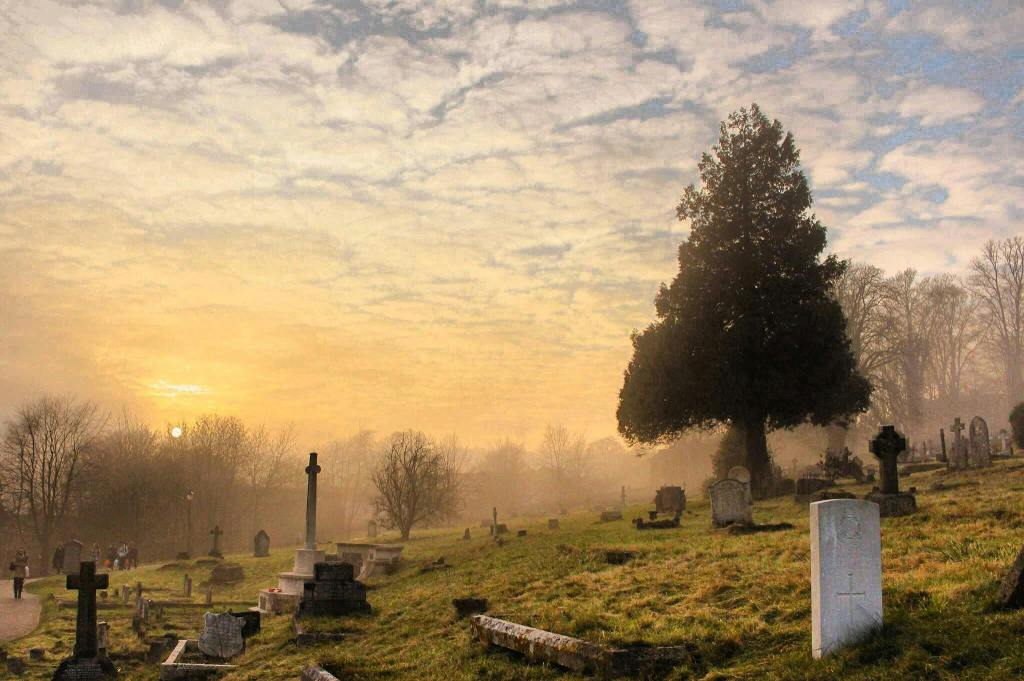
    And as I wander through this crumbly constellation of tombstones dotting “Cimitirul Eternitatea,” the sun setting ablaze the horizon with all the colors of desperation and angst, I’m searching for every cat of stone. Looking for you.

    Happy now, ma?

    Five… six… seven stone cats. I make a mental note.

    Which one are you?

    The sun now set, the moon a faint print in the sky, I sit myself upon a rusted bench along a cobble walkway between graves and puzzle over what to expect. You’re a cat (or so you claim). Of stone. Fitting, I suppose. You never were easy to understand. Ever distant. Enigmatic.

    Will you come alive with the blue moon? Or is this just more wasted time?

    A few plots away, an older woman tends to the cradle grave (presumably) of a loved one. O bătrână. Frumoasă. Swaddled in a black shawl and red headscarf, she lights candles, places them into gilded lanterns hooked on either side of the white marble tombstone. Their small flames illuminate the mass of rose bush spilling out from the grave where it had been planted. Nurtured and grown. Here. She reaches for a white rose, bloomed wide, and caresses its petals. Offers it care and warmth. Acknowledgment. She turns, meets my eyes. Smiles.

    I nod, smile back.

    The blue moon (luna albastră) crowns the distant buildings now, accentuating their brash and distinct brutalist-styling. I remember the letters, the few tales you’ve shared. Of communism and corruption. Of hardship. How, even after the revolution, life wasn’t easy. You did what you thought was best. Gifted me an opportunity at a life you never dared dream for yourself. And I don’t blame you. But that doesn’t mean the missing hurts any less.

    The older woman rises from her tending beside the grave and approaches, small bags clutched and crinkling in hand. She nears, says something I don’t understand, and proffers a bag.

    My throat dries, tenses. Uncertain of what constitutes proper protocol in this situation, all I can think to do is shrug, say, “Uh…”

    “Zi bogdaproste.” She makes light of my ignorance with a soft chuckle, waves her hand in encouragement as she repeats, “Zi bogdaproste, dragă.”

    “Bo–bogdaproste.” The word is clumsy on my tongue, but her brown eyes twinkle.

    I accept the bag she proffered. Seemingly pleased, she nods and departs.

    Stars blink now, and the blue moon glows overhead. I rise from the bench, my eyes already leaping through the cemetery, sweeping across stone cat after stone cat. They’re all where they were, ornamentations scattered amongst various graves. Except one.

    Did I…miscount? I must’ve.

    I cannot move, stilled by thoughts and recollection.

    But… no. No, I didn’t… There were seven cats. But… dammit, ma! You can’t be…

    My legs start to move, aimless at first, wobbly, then with vigor, dashing between tombstones towards where the one cat is missing.

    You’re gonna owe me such an explanation. Can you… even talk as a cat?

    Movement catches my eye. A man in overalls. He’s charging towards me, hollering nonsense, a hoe raised above his head. I lunge behind a nearby tombstone, shout back as he passes, “What the fuck!”

    He pays me no mind, keeps on.

    I shake my head, bite my lip and rise, glaring after him and his maniacal assault. It’s then I spot you—a sleek figure darting just ahead of the man, dark feathers streaming from your mouth like a grotesque trophy. And I don’t know how, but I recognize you instantly. Some inexplicable knowing, deep in my bones.

    He’s got you backed against a thin copse of trees, swinging his hoe. Jabbing.

    You stand your ground. Hiss and shriek. Bristle.

    I come up behind the man, angle myself so he sees me. He shouts something, sounds like profanity, but I wouldn’t know. Flashcards shuffle through my mind. I search for something to say, something he’ll understand.

    “Vă rog!” I start, firm, “Gata.” Enunciating every syllable. “Pisica e bună. Vă rog, pisica e bună.”

    He jabs again and again. Misses you. Misses you.

    Vă rog! I implore. Please.

    He looks at me, shouts back, “Pisica nu-i bună. E agresivă. Sălbatică.”

    From what I understand him say, I agree. You look the part: plumage and bones pouring from your mouth. Jagged. Bloody.

    “A mea,” I insist, stepping past him, towards you. “Vă rog, pisica e a mea.”

    Breeze and breath fill the silence.

    I bend down, scoop you up. You paw at the bag the older woman gave me.

    “Mulțumesc,” I say, backing away through the trees. “Mulțumesc.”

    He waves us off.

    “Plecați de aici! Plecați!”

    I hurry, eager to be rid of him, too.

    It’s true night now. Bright stars wave from their beds of distance and darkness, thousands of small candles wave back, cozy beside their flowers and tombstones, left behind as the stream of straggling visitors trickles out past the iron gate.

    I settle us in the quiet, sit on the steps of a small mausoleum. Look at you.

    “Ai venit, Starla! Ești aici.”

    My heart skips a beat.

    “What?”

    “Nu avem mult timp, draga mea. Ascultă-mă.”

    Gibberish in my ears, I forget to breathe. Just stare at you.

    “No. Nooo. No. You’re a cat. Cats don’t…don’t do that.”

    “Starla. Ascultă-mă. Te rog. Ascultă-mă. E foarte important.”

    I press against my temples, feel my pulse hasten.

    “Ma,” I say, half in disbelief. “Ma, I don’t understand you. I don’t…understand any of this. You’re dead. You’re supposed to be dead. The fuck is going on? How are you alive? A… a cat. How is… any of this happening?

    I cover my eyes. Breathe.

    In all the years that I’ve received these messages from you, I didn’t actually think anything would turn up. It’d just be some sick joke. A misunderstanding. I came here on a whim, not on belief. I came hoping to prove to myself that whatever insanity was transpiring, it was… unprocessed grief manifesting as… something, anything other than this. Because this… can’t be real. Cats don’t talk. Cats don’t talk. THEY DON’T TALK!

    I stumble to my feet, pace along the steps, clap the tips of my fingers together. You follow along beside me lithe and calm and regal as any cat. Somehow that makes everything seem even more impossible.

    “I don’t even…” I exhale. Stop. Look at you. Away. At you again.

    “Concentrează-te, Starla. Concentrează-te,” you say. “Ai telefonul tău?”

    “I. Don’t. Under. Stand,” I say, miming to you. “You’re. Supposed. To be. Dead. Why aren’t you dead?

    You roll your eyes, grumpy-growl at me.

    Your ears shift back and forth, like you’re listening to something.

    “Urmează-mă. Repede.”

    You’re gone, weaving through trees and tombstones. Swallowed by the dead and night.

    “Good God!”

    I hurry after you, more stumbling than running. For a time, I can no longer see you, just keep drifting from candle glow to candle glow. Exasperated and weary. Then I hear you: a guttural shriek followed by what sounds like the howl of a man. I hurtle myself in your direction, prickly bushes and chipped tombstones lash and brush against my arms, my pants, scrapes stinging.

    I come upon a hooded figure curled on the ground. Rocking, whimpering.

    “Ma?” I call out.

    A few rows away, behind a tombstone, you call back, “Aici, Starla. Sunt aici.”

    I press forward in the direction of your voice, confused and hating myself for leaving the injured person behind. What did you do, ma? What did you do?

    A cellphone’s glow illuminates your form in the dark. You’re snarling, pawing at the screen.

    “What are you…”

    “Trebuie să vorbim, Starla. Am nevoie să înțelegi. De ce nu înțelegi?

    “I don’t understand because you weren’t there to teach me! Fuck!”

    I take the phone in my shaking hand, stare at the lock screen. It’s a blur at first, my eyes adjusting to the influx of light, then a young couple. Crisp. Smiling. Bright. The phone slips from my hand — or I let it go. I don’t know. But it lands with a thump on the cobblestone. Cracks. And I teeter to the side, lean against a tombstone. It’s cold and solid and the greatest comfort. I slide down until my butt meets the earth. Just sit there.

    “Starla. Dragă.” You come beside me, nuzzle your nose into my leg.

    I want to brush you off. I don’t. You’re warm and here and alive. And I don’t. But I don’t embrace you either. Just let you be. Be beside me. You’re here…

    “What did you do, ma? Ce ai făcut?”

    A growl is your response. Bristling.

    I look up. Scream.

    A man stands over me. Us. No longer hooded. A deep, clawed-gash marks his left eye. Red pulses and dribbles down his face, splashes against dirtied sneakers and the ground. He yells. Hits me. Shoves me against the tombstone, his grip dizzyingly strong. I can’t think. I let him. I can’t think. I let him. I can’t think.

    You don’t let him. You nip, snarl, and claw.

    He turns, tries to grab you. You nick his hand. He shuffles, goes to kick you. And I don’t know where you land, only hear the thump. The wheezing that follows.

    “Ma,” I say through tight breaths. “Ma.”

    I don’t see when he leaves, just know that he’s gone. Phone, too.

    Once my feet are under me again, I go to find you. Your breath is sharp, soft, and all I can hear. Neither of us says anything as I scoop you into my arms, hold you to my chest.

    “I’m sorry, ma. I’m sorry.”

    What I apologize for, I don’t know. Just seems right.

    You lick my hand.

    All I can think about is getting you someplace safe where I can take care of you. We’ll figure everything else out later.

    We have a later…

    I trudge towards the exit, draw near. You weigh heavier in my arms, fur stiffens, and streaks of grey ripple across you. You’re turning to stone and your shriek stills my heart. Stills me.

    “Nu pot pleca,” your voice is a whisper, cuts deep. It takes all I have not to fall to my knees. “Nu pot. Nu… Nu pot.”

    Not knowing what else to do, the blue moon fading from the sky, I take you back, place you where I first found you. The missing cat. And as stone takes you, you say, “Te iubesc, Starla. Draga mea. Te iubesc.”

    “Te iubesc, ma.” A tremor in my chest. “Te iubesc.”

    I follow the rising sun to leave, pass a still flickering candle and stumble upon that crinkly bag the older woman had given me. Treats fill it, wrapped in packaging with words in your tongue. Some I know. More I don’t. And so, I’ll learn them. One at a time.

    “Until the next blue moon, ma… Ne vedem curând.”
  • The Last Dance

    The Last Dance

    (Originally published on Medium on February 4th, 2025)

    A shiver like a familiar touch spreads across Charles’ shoulder—in the place where she had always touched him. He glances right, and the space beside him on the bed is empty. Still empty. He takes a breath, slow and deep, fills his chest.

    His son says, closing the bedroom door behind him, “Goodnight, father.” He pauses. “I’ll see you in the morning.”

    In the morning.

    He nods to his son. Somehow already knowing.

    Alone, now, in the room they had shared, he sits up—his arms frail and quivering under him.

    He says to the emptiness of the room, “I feel you.” His voice is no more than a rough whisper, weighed with a longing borne of too much time spent on his own. Without her. “I’m here, Rosalynn, dear… I’m here.”

    He scans the room, searching for her. She does not appear.

    Through the patio door a moonlit glow washes over him, suffusing the room, gleaming off the glass of the clock on the wall. The clock he had made for her. Its bells ring, soft and soothing, calling him to a place, to a time he remembers from long ago.

    Charles closes his eyes and basks in the moon-beam light, in the gentle sounding of the bells.

    He opens his eyes. Rapt by the light outside, he moves, slipping slowly off the bed, his withered steps not always steady, not always sure. The crick in his hip flames for a moment, almost as if a reminder of the pain he has willingly, happily endured, biding his time. Waiting.

    For her.

    He opens the patio door and steps out. Steps again. And again.

    And in the span of a breath, he’s at the park. Their park—where they had been young and had first met. The lawn is wet and his feet squish and sink into the muddied grass, but by some sort of miracle he manages not to slip as he hobbles towards the bench. The bench where they had sat, where they had talked, where those first buds of knowing had bloomed between them. He lolls himself down, pressing the curve of his back against the seatback. He huffs for a moment, catching soft breaths, fading breaths.

    The light of the full moon glistens atop the water, painting dazzling white streaks across the rippling black canvas.

    Sitting in the quiet, Charles stares for a moment; he takes in all the sounds of nothing as they play in the background. He is alone here. Alone and waiting.

    Then, as if pouring out from the white streaks of moonlight dancing across the lake, he hears a symphony’s song. It begins as a hum of strings and wind but grows melodically; a rich accompaniment of brass merges with the strings and wind, crescendoing into an orchestral effect so brilliant he cannot help but to stand.

    A pulling sensation tugs at the fabric of the black suit he is now wearing. And, led by the symphonious sounds, he lets himself be lulled toward the lakeshore. He bends over, peering into the water, into that shining bright white. It is not his face he sees. It is hers.

    He does not permit himself to cry, though tears well and swell in his eyes. He will not cry. “It’s all in your head, Charles,” he says to himself. “Yes—Yes, that’s right. All in your head.”

    He closes his eyes, resides in the darkness for the span of a few strung strings. When he opens his eyes again, he sees she’s still there. She says nothing—but her face says it all. Her tells, which he had come to know well during their lifetime together, give everything away. Just as they always had. The quiver at the edges of her eyes. The slight parting of her lips. The faintest tilt of her head to the left.

    Come, her tells seem to say. Come and find meCharlesfind me.

    He does not hesitate. He steps down into the lake; the water parts like curtain veils before him. He expects to feel wet, to be swallowed by the water. But no. No, he’s dry. Dry and walking now across a dance floor. Couples twirl and dance around him, lovers caught in the melody of a song so impossibly beautiful, so impossibly elegant as it suffuses the grand golden ballroom Charles finds himself in. Calming. Until he remembers…

    I must find her. My dear Rosalynn.

    He thinks he sees her. There! She was just there, twirling so close he could have almost reached for her. He does, and his hand falls through the empty air.

    She isn’t there. Not anymore.

    He starts across the dance floor, minding the dancers, minding his steps—each one stronger than the last, sturdier, more confident. Bolder. He passes by a wall adorned with mirrors, all framed in gold, resplendent with rubies and emeralds, glittering in the amorous chandelier light. His reflection changes, though he does not notice. His posture straightens, taller, leaner. The thin white wisps atop his head become richly dark curls, thick and tousled and tumbling just past the edge of his broadened jaw. The milky haze coating his eyes dissipates, replaced by a youthful forest-green gleam as he scours the dance floor; his mind sharper now than it had been moments before, more focused than ever. On Rosalynn.

    Where are you, love? Where?

    This way and that way he wanders; a maze of bodies surround him, all stepping in perfect harmony, in time with the beat of a song so familiar it is nearly on the precipice of his remembering.

    And then, with a spin… she’s there.

    Swaying in an open space on the dance floor, she’s garbed in a gown of tulle and white. Her wedding gown. A wonder, she is, to behold. Here and real and wholly his. At last, my sweet Rosalynn. At last…

    She waits for him, alight in a glow such as only her own beauty could equal. Her brown eyes shine, flecked with amber flames; hers is an enveloping gaze, one which wraps its way around Charles as he nears, piercing into his soul and holding it—holding him—firm and warm and dear in an embrace sewn from all the love and joy and laughter of a lifetime lived happily together. She proffers her cheek. He steps to her, pulls her close with arms strong and with no trace of their former quivering. Charles kisses her cheek, smiling as his wife’s face blossoms sunset red.

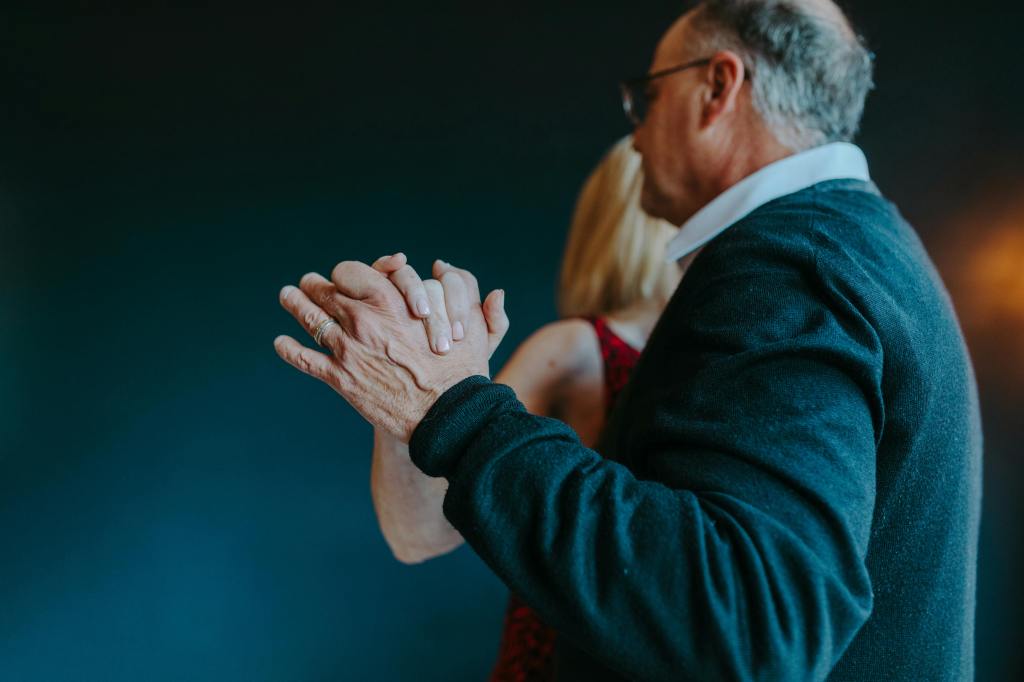
    They dance. Slow at first, recalling the placement of hands, the pattern of steps they once knew. With time and new familiarity, their movements find their vigor. A surety shows in the confidence of their steps in time with the beating of their hearts, of the strange, familiar song carrying them across the dance floor. A song Charles remembers now, though he’s never before heard.

    The music slows, as do their steps, and time all but ceases to pass. She leans in, rests her head on his shoulder. He can refrain, now, no longer. Charles cries. He lets the welled-up tears fall. And they fall. And they fall. And they fall. A lake he could fill with his tears, and it would be the sweetest lake. She wipes his tears away, absorbing them as though she was absorbing—absolving—all the pain, all the yearning his soul has had to carry all these long years he has spent without her.

    “Are you ready, Charles?” Rosalynn asks, her voice as warm now as ever it was, softer than petals on water.

    “Ready for what?”

    Her eyes say it all.

    “Yes,” he says, taking a breath that never comes.

    I want to be with you… Light blazes around them.

    To be with you… Music plays, everlasting.

    Be with you… A new dawn rises.

    And he sleeps.

    His son walks in, says, “Good morning, father.”

    A soft melody plays, one he knows, though he’s never heard.

    He cannot hear it. Not yet. But someday. Someday far away.

    “Father?”

  • Of Depth and Deception (Chapter 1)

    Of Depth and Deception (Chapter 1)

    The full book is available on Amazon here.

    Chapter 1
    Skehl

    Skehl trailed his sister into the Belly, a white-grey haze of glow and gloom greeting them like a watchful mourner—or an anticipatory accomplice. At this gelid, stale depth of the Aghata Trench, with all the heaviness of an ocean crushing down upon him, he could hardly breathe. Hardly think. He bit his lip, clenched his webbed-hands, and endured. Slinking through this thick, clinging veil had become just another reality of his life. Another of the myriad consequences resulting from his and his sister’s most treasonous decision to spare the living…

    By stealing the dead.

    In and out, he assured himself, kicking his long blue tail. Two bodies, that was all they needed. One each to replace the clan deserters they had only hours prior permitted to flee, escape. The sooner they found their replacement bodies, the sooner he could turn surfaceward. Towards the Skaltressian Palace where an entrance exam that would forever alter the course of his life was set to take place… if he hadn’t missed it already. Time was impossible to discern when down this deep.

    A moment passed of silent swimming, and the first bodies began to appear. Each one manifested like a shadow, limned by the faint grey glow of that pervasive, sickly haze. Skehl flicked his gaze from one to the next. There was a time when their bloated, rotted forms would have sent chills like squirming eels down his spine. But no more. Months of experience had killed that instinct. 

    From their empty eye sockets, their gaping mouths, the final remnants of their lifelight wisped in languid, dull-white streams, thinning, melding into the gloom. Tethers of kelp-twine were all that kept them from drifting off; one end tied around their waists, the other around any of the countless sunken boulders, bedded deep in the sludge and grime.

    A chill brushed against one of his tattered blue tentacles, on his left side—his blind side. He furled it at the tip, drew all of his few dozen tentacles closer. When he glanced back, he saw it was only a corpse’s splayed, frozen fingers. Imagined the dead actively reaching out to him. Like an omen of condemnation.

    He swam on with haste.

    His sister offered little help. Just swam steadily onward, her mass of usually mighty magenta tentacles rustling along her body, limp and lifeless. She moved as if lost in a daze. Or in the depth of herself. Her self-imposed distance, like armor, proved most impenetrable precisely when Skehl needed her most. 

    Like now. 

    This would go a lot faster if you would actually—There!

    He beat his tail, swimming over a few more swollen bodies towards one a little fresher, nearly identical in color and size to one of their freed deserters. This one’s color was a slightly lighter green hue, but her length and build, as well as the circumference of the wide jellyfish-like dome atop her head, were close enough. 

    “Thressel!” he called, waving to get her attention. “How about this one?”

    The body would suffice. He only wanted her to offer some semblance of presence, acknowledgement.

    She gave neither, just continued her slow drifting. When she did move, it was only to clasp her hands at her waist, where the shimmering scales of her tail blended into the bare Lais-moon pink flesh of her lower torso. Across her chest, her kelp-shawl rose and fell in time with her breath.

    “Thressel…” he said, kicking his tail, doing his best to close the space between them. “Can you be here, please? With me. I–I really need us to hurry.”

    She turned to him, eyes wide with dull surprise, as if she had forgotten he was there.

    “She’ll do.” Her voice was tired, brittle. Like the crumbling of sun-dried kelp. 

    Skehl sighed, his top lip twitching. “Great. Thanks.”

    He turned from her and withdrew a clamshell-knife from his satchel, set himself to hacking through the twine.

    “Here.” He held the corpse out to her. “Char away.”

    Even with his back turned as he resumed his search, the brilliance of his sister’s Shock, reflecting off the haze, nearly blinded him. The sharp crackling of her power, the searing sting of it, poked and prodded him from all sides, like teeth closing in around him.

    Sacrilegious as their actions here were—in this place meant for somber reflection, for family and remembrance—they worked. Rare was a raised eyebrow or a pointed inquiry when a body was returned to the palace marred beyond recognition. Such was the privilege of Trenchguards, of which his sister was one. One of the best.

    Skehl continued in silence, doing all he could to ignore that warm, black stench of death that seemed intent on infiltrating his nostrils and gills. It might have been torture, had it not become so ordinary an occurrence.

    As a distraction, he focused on time. Its steady passing. 

    He regretted it immediately. 

    I’m… not going to make it back in time, am I?

    A faint purple glow appeared. Off in the distance.

    Someone was coming. 

    No. No, I will not…


    Read Chapter 2 here!

  • Of Depth and Deception (Chapter 2)

    Of Depth and Deception (Chapter 2)

    The full book is available on Amazon here.

    Chapter 2
    Skehl

    On his own, Skehl could have hidden easily enough. His own blue glow was subtle, like the light of the Cal-moon, if watered down and muffled behind a splash of dark clouds. 

    Thressel, however, was beyond hiding. Tentacle-laden as she was, she shone like a sun against the Belly’s dim, colorless backdrop.

    All they could do was wait.

    An older Skaltressian approached through the haze, slender and rustling with a modest amount of mauve tentacles. Her arm draped the shoulders of a boy barely beyond his youngling years. Her brother, no doubt. Skehl noted the boy’s length, those vibrant red tentacles, swaying amidst his tilted posture. As if he were struggling to keep his balance.

    It was the boy’s eyes, though, that most piqued his interest.

    Inky white… he realized, leaning in as the siblings neared. He’s Shattered.

    Skehl hated himself for the relief he felt. For the plan he was already forming. 

    Technically, the boy was still alive—in the sense that he was still breathing. Yet everyone knew there was no coming back from a Shattered mind. Skehl especially. 

    Because of Binah.

    “Greetings,” the mauve sister said, her voice strained. “I didn’t expect… OH!

    Her eyes went wide, fixed on the burnt body.

    What have you done?

    Skehl turned to Thressel, unsure what to do or say. They had never been caught before. From her downcast eyes, her lips tight as a clam, he knew he was on his own.

    “She was, uh…” he began, crafting his lie as he went, “a Trenchguard. Killed our older sister. Burned and brutalized her for unpaid medical debts after I…” He gestured to his blind left eye.

    The mauve sister recoiled when she noticed and held tighter to her brother, as if Skehl’s “condition” could have somehow harmed the boy more than he had already harmed himself.

    Facing down her upturned nose and that twinkle of fright in her eyes, Skehl could only think of how this—right here—was precisely why he needed to make it to his exam. Should he pass, he would be welcomed to join the ranks of apprentice Seers. He would finally belong somewhere. With others who understood his power. The nuance of its price. And he would be spared the fate of those left untested, untrained. Like the boy with the red tentacles. That he had survived this long on his own was a miracle.

    “It’s been years since we lost her,” Skehl continued, sprinkling in a little truth. “And the pain never ebbs. When we learned that the Trenchguard responsible for her death had passed, well… sometimes vengeance calls with a fervor.”

    The mauve sister traced Skehl’s form with her eyes, that etching of disgust never leaving her face. Her gaze passed to Thressel, to her multitude of pristine tentacles. A symbol of status and power.

    She turned back to Skehl. 

    “Unfortunate as your sister’s untimely fate is, it was the price of your own negligence. You never should have attempted what you did. This”—she gestured to the young boy— “is where your selfish indulgence will get you.” The gills on her neck fanned as she took a few steadying breaths. “It’s disgraceful—what you did to that Trenchguard. She was… only doing her duty.” Something flickered across her face. “Though, I suppose I can understand the sentiment. Our older brother… he, uh… The same.” 

    Skehl wanted to say something, to offer some sort of comfort. 

    But what does one say to something like that?

    “Was it worth it?” the mauve sister asked. “Whatever it was you Saw?”

    He glanced again at the boy, floating there. Tilted. Lifeless, and not.

    That question isn’t really for me, is it?

    “In a way,” he said. “What I Saw…  I’ll never forget it. Or, more so… the reason I chose to do it. Rarely is one’s intention ever solely self-serving.”

    The mauve sister held his gaze, a thousand nameless emotions playing at the corner of her trembling lips. “Thank you.” 

    Thressel grabbed Skehl’s hand, squeezed.

    “Alright,” the mauve sister said, stifling a bubbly sniffle, “off with you both, then. And remember, the Belly is a place for mourning, not vengeance. Whoever they were in life, the dead are owed their rest. Understand?”

    “Of course.” Skehl’s stomach was a tangle of knots; he still had a plan.

    He and Thressel kicked off, left the mauve sister to her tethering, her grieving.

    Once a short distance away, Skehl leaned towards her and whispered. “Not too far. I have a feeling she’ll be quick.”

    Thressel stared at him in that lifeless manner all her own. 

    “His size.” He glanced past her, saw the mauve sister was already tying the boy’s tether. “His coloring. A strong charring and we’ve got our last body.” 

    “But…” She narrowed her eyes. “Skehl, he’s still alive.”

    “Was Binah still alive?”

    She bit her lip and turned away, blowing a hard stream of bubbles through her nose. “We’ll find another. However long it takes.”

    Skehl clasped his hands together, gills fanning. “Thressel—”

    No, Skehl.” Her resolve was absolute.

    Now you come alive. Just to hold me back.

    She rustled off, away from the boy.

    Skehl clenched his jaw and turned again to the mauve sister, watched as she pressed her hand to her brother’s cheek, every part of her quivering. She lingered for a moment, whispering something in his ear. Then swam off, disappearing into the grey-glowing gloom.

    Now was his chance.

    You never lift a tentacle to help me… 

    He beat his tail, shot straight for the boy. 

    Let’s see if you’ll lift one to stop me.

    A kick, another—and he was by the boy’s side. 

    Clumsily, he rummaged through his satchel for his clamshell-knife, halting only when he heard that undeniable, muscle-freezing sound: breath.

    He swallowed. 

    But this isn’t living, he reassured himself. Like Binah wasn’t living when Thressel—

    He drowned the thought, focused again on the boy. On that whisper of warmth radiating from his cheeks. On that screaming expression that would forever mar his too-young face.

    Yet in his eyes…

    Skehl saw Binah, his older sister. Her madness in the end. The pain of losing her. 

    He saw himself. The future he was fighting so hard to flee, escape. 

    He withdrew the clamshell-knife from his satchel, raised it to the boy’s throat. Pressed so tenderly, his hand trembling.

    Why can’t you understand?

    He felt that steady pulse, the boy’s life, rippling through the water. Like a prayer.

    But for what?

    He took a breath. Then another. 

    Readied himself. Then readied himself some more.

    “I can do this!” He hadn’t meant to shout.

    He didn’t move. Couldn’t. Not a muscle. 

    His eyes began to sting.

    “I can…”

    Movement in the water, Thressel swooshing up beside him. 

    “Skehl,” she said. There was no fury in her eyes. Just his own reflection.

    He saw his own fright. How puny and pathetic he was.

    Is that how you see me?

    “Is getting into the Tide’s Eyes really worth this?” she asked. “After all Seeing has done to us? To you?

    He recalled Binah’s face from that last day, when he had found her—what remained of her. Her lifeless eyes. Her mouth agape, as if frozen in perpetual pain. How weak she must have felt after so long strong. How she must have lost control while doing that singular, glorious thing that is most indescribable. Most irresistible. 

    When the itch comes calling.

    “Yes,” he said.

    Because I can’t do to you what she did to us…

    Thressel stared into his eyes; he almost recoiled. Almost.

    “Fine,” she said. “Then kick off.”

    “But I—”

    Kick off!

    That tone of hers… it brooked no argument. 

    He slunk away. Watched as she coiled her tentacles around the dying boy’s body, squeezed. She looked as though she was more clinging to the boy than… killing him.

    Skehl didn’t turn away as she let loose another burst of light, another thunderous crackling—all that power he didn’t possess. 

    If he could not do the deed himself, he would at least bear witness. Act the accomplice. 

    It was the role he knew best.

    And the deed was done.

    The deed was done.

    They started back through the Belly, silent, kicking their way towards the tail-end of the trench, where it opened to the uncharted waters of the western ocean. Best to avoid swimming directly surfaceward through the trench itself, to keep away from curious eyes and rumor-spinning tongues. While cruelty was not uncommon for Trenchguards—indeed, it was negligible amongst their own—the commonkin were better left in the darkness of ignorance.

    Skehl swam fast, playing dozens of scenarios through his mind. Some in which he arrived at his exam on time, the tests and trials he would be asked to complete. And others where he arrived late, and all was for naught. They were mere distractions. Inept ones, at that. For the boy—now dead—surfaced in every one. 

    He was… already gone…

    A familiar voice pulled him from the mess of his mind, and he realized they had arrived at the trench’s tapering end.

    “I should be getting relieved soon,” came that deep, predatorial tone that could only belong to a Tethien. To Bren, Thressel’s partner. “And we’ve both got the next few days off. How about we go for a little hunt, hm? Just you and me. Out in the western ocean. Heard a pod of spear-nosed slashers should be migrating through—and I know how much you love a good chase.” He pumped his brow and flexed his absurdly large biceps, clearly for Thressel’s enjoyment. “What do you say?”

    Skehl rolled his eyes at Bren’s asinine proposal. The western ocean was said to be amongst the most perilous. Only the strongest, and the most foolish, would dare venture there.

    “Hey! Before everyone gets all mushy,” came the shrill voice of Cahla, Bren’s Trenchguard partner, “Pay up.”

    She held out her hand to collect their bribes, the cost for her discretion. 

    Skehl dropped three moonstone-chips into her palm. 

    “Well?” she said, dark eyes fixed on Thressel.

    “Assignment came unexpectedly,” Thressel said. “I… forgot my chips in the barracks.”

    Cahla’s sunrise-yellow tentacles flared brighter. 

    “That’s the second time this month you forgot. I’m not running a Carekeeper’s hovel here.” 

    “You’re not doing anything here,” Thressel snapped.

    “What did you—?”

    “Please,” Skehl interrupted, holding his hands at his sides, “Can you two just drown all that?” He pulled out another three chips from his satchel and shoved them into Cahla’s hand. “Here. Some of us actually have places to be.”

    Cahla accepted the chips with a grunt, then kicked off a short distance away.

    “Well?” Bren flashed Thressel a toothy smirk, wagging his long, silvery tail like an enthused youngling. “What do you say?”

    Thressel hesitated, and Skehl was out of patience. 

    “Whatever you do,” he said, “be smart about it. And don’t go anywhere until the afternoon classes start, okay? I–I need you near. Please?” 

    Thressel nodded, the two charred bodies still swaying on the tethers she held. She would need to deliver them to her commander to confirm their assignment was “successful.” That would ensure she kept near enough to the palace. For a short while, at least.

    “Thanks,” Skehl said, meaning it. 

    And, as he kicked off surfaceward, he thought he heard the faintest whisper of her voice saying something that sounded an awful lot like: “Good luck.”


    Read Chapter 3 here!

  • Of Depth and Deception (Chapter 3)

    Of Depth and Deception (Chapter 3)

    The full book is available on Amazon here.

    Chapter 3
    Rader

    After two long weeks riding various westerly currents through uninspiring stretches of open ocean, Rader arrived at last before the Aghata Trench — not to the usual glamor and pomp that greeted him, but to the quiet puzzlement of two mere Skaltressian Trenchguards, utterly dumbstruck by his arrival.

    What a clever Tideress, feigning ignorance of my coming.

    He loomed over the Trenchguards, the steady swish of his long, obsidian-black tail keeping him balanced and poised amidst the ocean’s gentle morning sway. Disbelief kept them frozen before him, their mouths agape.

    “Hm,” was all he said, affecting an uninterested tone.

    They remembered their places then, practically throwing themselves into bows.

    Rader looked past them with practiced disdain, his gold-flecked blue eyes flaring with a fierce glow, like small white suns. He knew his role. He played it masterfully.

    The younger of the two Trenchguards— a boy with long, pleated tentacles that glowed a rich blue—stole a curious, not-so-furtive glance across Rader’s body, then back down into the trench’s vanishing blackness. He was quick, yes. Both daring and demure in equal measure. But Rader was quicker, glimpsing precisely what he had most longed for throughout his long journey: a comely face, blushing.

    The Emperion grinned, his gaze flitting over the boy once more, drinking in all his most alluring features: toned arms, broad shoulders, and that slender, sun-sparkling tail.

    A clever Tideress, indeed. Remembering how I do so adore blue…

    “Good morning,” he said.

    “Favored,” the Trenchguards said as one. Then, the older of the two, laden with seemingly hundreds of tentacles in all varying shades of red, continued, stammering, “I–it is a tremendous honor that we may be at your service, Favored. Please, whatever you need, your will is our purpose.”

    She had raised her head to speak. Rader met her eyes and she averted her gaze once more. Silent and waiting.

    He let them wait, turning his attention instead to the trench itself.

    Like a black vein without end, it stretched in both directions, so wide he could barely glimpse the opposite side. Yet it was the red that most held his attention. Those long, spindly tendrils rooted to the trench’s walls and spilling past its craggy lips like the exposed, bloody innards of a festering beast. He knew it was only a rare algae that fed on the sounds that might otherwise grow deafening at greater depths. Still, he couldn’t shake his discomfiting awe.

    I’ve never known life to look so much like a dying thing.

    He returned his attention to the cowering Skaltressians, his gaze settling again on the blue boy.

    “You,” Rader said, and the young Trenchguard lifted his head. “Escort me to the palace.”

    Wide eyes and a twitch of the mouth. “M–me?”

    Rader flared the white glow of his eyes. Less menacing, more agitated. 

    And all for show.

    Yet the blue boy must have seen only menace; he shot a terrified glance at his partner.

    She elbowed him in the ribs. “Never keep a Favored waiting.”

    “Isn’t that nice,” Rader said, a calculated edge of annoyance to his tone. “At least one of you was taught proper protocol.”

    To be Emperion was to be unquestionable command. And Rader couldn’t change what he was. Or what was expected of him.

    “I, uh —”

    “The palace,” Rader repeated. “Now.”

    “Of course.” The blue boy spun, his tentacles splaying like a whirlpool as he did. He started north, along the trench’s eastern cliff, a flurry of bubbles trailing in his wake.

    Amused, Rader watched him for a moment — admiring the view.

    Then he kicked his tail and left, sparing not even a parting glance for the red Trenchguard.

    He caught up to the blue boy with effortless ease, pressed in close, and followed. The journey was quick. They swam along the trench until it split into two diverging branches. It was there, carved into the underside of a sharp-pointed plateau, that Rader spotted the Skaltressian Palace. From a distance, it looked like a spiraled amethyst shell protruding from the rock and viscera-red algae, encased within walls of pure diamond. Rays from the rising red and gold suns speared through the water, casting rainbow glints from the walls’ polished edges.

    Impenetrable diamond at the front; solid rock at the back. An excellent defensive position.

    Despite swimming so near the suns-warmed surface, a subtle chill had enveloped Rader, as if the trench itself was siphoning off his warmth. He dug through his travel satchel and pulled out the cloak he had purchased in Parel—the Emperion capitol—before departing on this technically “unauthorized” clan visit. Not that anyone would dare question an Emperion.

    The cloak emitted a soft golden glow and a pleasing warmth as he slid into it. Which made sense. It was woven from Skaltressian tentacles, all plucked and shredded—made thread thin. Lifelight flowed through every strand. Warmth and time, taken from thralls, and repurposed as comfort and luxury for whoever could pay the price. Or whoever was willing to.

    He pondered this for a moment, here in these Skaltressian waters, the reality he had never really considered before. Had never needed to.

    Movement drew his attention as they neared the palace. He was happy to let it.

    The trench rippled with life. Skaltressian Reeflords and Reefesses rustled about, all adorned in their cascading profusions of colorful tentacle-garments: cloaks, body-wraps, flowing gowns, each lightly weighted and glinting with diamonds, emeralds, or sapphires. Pearls circled their necks and dripped from their ears, while armlets of gold and silver gleamed in the sun.

    Their attendants trailed in tow, at a distance. Most appeared pallid and lifeless in the eyes, as phantoms are. In place of cloaks and pearls, they wore woven tatters of kelp and seaweed, strings of shells. It was a starker difference than any of the other clans Rader’s assignments have taken him to. Yet he was not here to comment or pass judgement, only to satisfy his own curiosity. 

    Back in Parel, he had found a scroll slipped into his sleeping-anemone—a bold breach of his private chambers. Or a foolish one. He might have been furious, had he not been so impressed.

    Rader chuckled to himself, recalling the scroll’s message:

    Forgive me, Favored, my disturbing you,

    but a most disastrous current descends upon our home.

    I beseech you to come to the Aghata Trench,

    for we are in dire need of that which only you can offer.

    More, I dare not say — Eyes are watching…

    We are unworthy, yes, as we are in need.

    Please, Favored.

    Come.

    ‘Come,’ written on its own line — practically a command… Amusement tugged at the corner of his lips. Typical, gutsy Tideress. 

    Had anyone else attempted to orchestrate such a scheme, he likely would have reported it to his superiors or come intent to reprimand rather than listen. Though, in the end, it was her why that intrigued him. This “disastrous current” she mentioned.

    He set his eyes on the Skaltressian Palace, looming as he approached. Murmurs and gasps surrounded him, his mere presence a spectacle. Rarer than rare were Emperions beyond the immense, white marble walls of their capitol. Rarer still was the Emperion who traveled without the accompaniment of a vast retinue stringing along after them. Like fish shit.

    Rader arrived before an archway carved from the diamond encasing the palace. A yellow Trenchguard raised her hand, signaling him to halt.

    “W—welcome, Favored,” she said, “to the Skaltressian Palace. We… were not expecting you.” She bowed, and the other dozen or so Trenchguards followed suit.

    “I can see that.”

    A subtle disturbance in the water behind him. Rader glanced over his shoulder and spotted the blue boy, his hands and tail trembling. When the boy realized Rader was watching, he hastily crossed his arms over his shell-armored chest and forced his tail steady and straight.

    Poor kid is wound up tighter than a Buroden Scenter’s braid.

    Rader offered what he hoped was a placating smile. It wasn’t very effective.

    “How impressive,” came a weathered voice—one Rader recognized even before turning back to face the speaker. “To approach my family’s home without drawing the attention of our Eyes.”

    “Indeed, Tideress Fahvia,” he said. “I am.”

    A creation long past her expiration, cloaked in a flowing shawl of emerald tentacles, hers was the presence of a glorious, dying tempest. Proud and dignified, despite the crack and pop of her every stiff movement. Yet those inky-white eyes still held that same indelible wit and warmth Rader recalled from all their few interactions over the years.

    She bowed, or tried to. He didn’t mind, and offered a respectful nod of his own. A being such as her —lifelight dimming — was due a tender amendment in expected propriety.

    Something, though, was not quite right.

    “Someone’s missing,” he said, glancing past her.

    The Tideress nodded.

    “My apologies, Favored. My brother—”

    “Is not who I was referring to.”

    The Tideress looked long into Rader’s eyes.

    “Cora will join us when it is time.”

    What are you playing at, Tideress? That Twanderian is practically your eyes.

    “I see,” he said. “It’s just… I don’t believe I’ve ever seen you without your… shadow. Not in recent years, at least.”

    Assistant,” the Tideress politely corrected.

    Rader shrugged.

    “Come,” she said, turning towards the palace. Then, as if catching herself, “If it pleases you, Favored. I would have the honor of showing you to your chambers.”

    Rader arched his brow. “I never said I was intending to stay.”

    The Tideress had already kicked off towards the palace. “You did not.” 

    He laughed, started after her, then stopped again as he entered the palace waters.

    “You will join me,” he said over his shoulder to the blue boy. His tone brooked no argument from the Trenchguards, nor refusal from the boy. “I suspect this will be quite the education for you.”

    He winked.

    The bulge in the boy’s throat bobbed, but he followed.

    Rader knew the boy’s kind: a low-ranking Shocker—young, yes, though undoubtedly already trained to kill. And most certainly never permitted access to the palace without a summons. He would learn much, indeed.

    Especially once the theatrics are through…

    The Tideress swam purposefully—if not glacially—through the palace’s wide doors. And Rader was welcomed with bows. Again, not quite the pomp he was accustomed to, but closer.

    A stream of attendants swam in line behind him. Each carried offerings and gifts: shimmering jewels, tentacle-rich garments, or local delicacies, many charred or spiced. He slurped down a particularly plump snail and permitted an attendant the privilege of dabbing the corners of his mouth with a bit of kelp. He would leave most of these trinkets behind once his work was through. Whatever sort of work it turned out to be. But he could not refuse. This lavishing was how the lesser eight clans expressed their loyalty to Emperion-rule, while affirming their respective prominence within the inter-clan hierarchy.

    In short, it was a tail-measuring contest.

    The journey to his private chamber was long and disorienting. Corridors branched and crisscrossed, each one lined sparsely with crystal sconces, puddled with the quiet glow of white moonstones. Portraits of passed Tides adorned the amethyst walls; and in every entryway to every room hung colorful and bright privacy-tentacles.

    And I thought the Imperial Palace was… excessive.

    When they finally arrived, Rader and the Tideress waited in the corridor as the attendants deposited the gifts throughout his rooms. Once finished, she dismissed them.

    The blue boy lingered nearby, his eyes wide and tracing every opulent detail of the majesty surrounding him.

    “Wait here,” Rader said, gesturing beside the entryway to his rooms.

    The boy obliged as Cora flippered out of the chamber and into the corridor, her shoulder-length green hair drifting around her face like a wild mane. The soft moonstone light reflected off her brown, turtle-like shell—the broad front fused to her waist, two green flippers sweeping from either side, and a small tail out the back.

    “Favored,” she said, bowing first to him, then again to her Tideress. “I’ve just finished tidying your rooms. If there is anything you find yourself lacking during your stay, it would be my absolute pleasure to see it taken care of.”

    “Hello to you, too.”

    “Calm the boy,” the Tideress said, shooting a glance at the young Trenchguard. “Lest his racing heart spur a trickster-current to sully my halls.”

    “Tideress,” Cora said with a bow, then kicked off to join the soothe boy beside the two Trenchguards who had earlier been assigned to Rader’s security.

    He felt the urge to knock on her shell as she passed by, though resisted. His days of youth and whimsy had long set.

    The Tideress gestured for him to enter.

    He passed through the privacy-tentacles and noted that they were selected to match his own Emperion coloring—obsidian-black with occasional glowing streaks of gold and blue, a distinct reminder of what he was. 

    Favored by the gods.

    There were three rooms in total: a bedroom in the far back, separated by another set of privacy-tentacles; a writing room directly overhead, designed so as to form a pocket of air where he could sit and write, unimpeded by the water; and the main room, overflowing with countless chests, all brimming with his offerings and gifts. 

    The Tideress rustled in after him.

    “Again, I do hope you will forgive our lacking welcome, Favored,” she said. “Truly, we had not an inkling of your arrival.”

    Now that they were alone, the deference in her tone was slightly unsettling; typically, the theatrics of politics only held so long as they were being observed. Or watched.

    He recalled the note: Eyes are watching. 

    Then… even now we must play our parts.

    “You wouldn’t have,” he said, playing along. “I’m here on reprieve, not officially.”

    “Oh.” The Tideress feigned surprise. “Well, regardless, we are most grateful for your presence here, Favored. Though, regrettably, my brother has missed you by a day. He left with Risings Yu and Elihana for the Tethien Academy to—”

    “Help her prepare for the Imperial Heir’s upcoming Showcasing,” Rader finished for her, waving a hand. “I understand.”

    He flicked his gaze towards the entryway, partially to play the role the Eyes would expect of him, but also because he was tired, his tail throbbing for… relief. He was here for the Tideress’s benefit, yes. Just as any sympathetic acquaintance would. But after two weeks of lonely travel, he wanted it clear where his immediate focus lay—on one very specific, comely-faced blue boy.

    The Tideress resumed, clearly cutting to the most prudent details, “Rising Dahvi will be gone for six weeks, Favored. A pity, really—that you won’t be here when he returns.”

    Seems that’s my timeline.

    “Indeed, it is a pity.” Another pointed glance towards the entryway.

    The Tideress turned as if to leave, then turned right back, acting as if she had just remembered something.

    “Pardon me, once more, Favored. I nearly forgot. Your sleeping anemone, I wish to ensure it is to your liking.”

    Rader just stared at her.

    Testing my patience now, are you?

    Tension lined his jaw. “Of course, Tideress.”

    He kicked his tail and swam towards the bedroom. Passing through the second privacy-tentacles, his gaze immediately fell upon the only noteworthy item there—the sleeping-anemone. It was impressive. A rare subspecies highly sought after precisely for its scarcity. And for its resemblance of glittery constellations strewn across a black winter’s night. Yet, of course, he knew there was more.

    He swam up beside the anemone and slid his hand through the base of the tentacles until he found something tucked deep within.

    Another note?

    “Favored?”

    “It’s perfect,” he said. “I will rest now. Leave.”

    A brightness to her tone, “As you wish.”

    He unfolded the note, written with Inkleon ink on a severed piece of a Dhargonian’s seaweed-like appendage, and read:

    Find the twins, colored like gods.

    Listen for their scheme, then stray not from the list.

    Below that were names. Dozens.

    Twins? He furrowed his brow. Surely, she isn’t referring to Serefians…

    Regardless, with so many pieces now settled into place, he knew exactly how he wished to pass the remainder of his day.

    Most certainly not here and most certainly not alone.

    “Cora,” he called.

    The Twanderian poked her head in. “Yes, Favored?”

    “The Pleasure Rooms, please. And bring the boy.”


    Thank you so much for reading the first three chapters!

    If you like what you’ve experienced so far, check out the full book on Amazon here.